


The Ultimate Montessori Book List: Best Books by Age (0-6)
You walk into a bookstore looking for a few nice books for your child. Twenty minutes later, you're standing in the parenting aisle whispering, “Wait... are talking animals allowed in Montessori or not?”
Yeah, it sounds familiar.
The internet has turned Montessori books into a weird stress test for parents. One person says fantasy is forbidden. Another says every child needs fairy tales by age three.
But, here’s the good news: Montessori is not anti-book. It’s simply about giving children stories and images that match their stage of development. Especially in the early years, children learn best from books that help them connect language to the real world around them.
Take a stroll with us through what actually makes a book Montessori-friendly, and how to think about the fantasy question without guilt. Let’s see the best Montessori books for kids from newborn stage through early readers.
What Makes a Book “Montessori”?
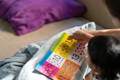
A Montessori book is simply a book that helps young children understand the real world in a clear, age-appropriate way.
In the early years, Montessori focuses heavily on reality. That means the best Montessori books usually include real-life subjects, clear images, simple language, and stories children can connect to their everyday world. Think animals that look like actual animals. Families doing familiar things. Objects that children can recognize when they look up from the page.
Most Montessori-friendly books share five things:
- Reality-based imagery or realistic illustrations.
- Concrete topics children understand.
- Beautiful, uncluttered visuals.
- Simple, age-appropriate language.
- Durable construction that children can handle independently.
One thing that often confuses parents is the difference between imagination and fantasy. Montessori does not reject imagination. In fact, imagination is a huge part of child development.
But, imagination grows best when children first have a strong understanding of reality. A child imagining themselves baking bread is different from believing a dragon lives in the garage.
That’s why many Montessori schools keep books, especially reality-grounded ones, before age six. At home, though, most families take a more flexible approach. You do not need to panic if Grandma reads Winnie-the-Pooh at Christmas.
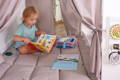
The Fantasy Question, Resolved
Let’s talk about the thing every parent eventually Googles at 11:30 p.m.: “Are fairytales banned in Montessori?”
Not exactly.
The traditional AMI Montessori position is that children under six are still building their understanding of what is real and what is imaginary. During these early years, they absorb information very literally.
That is why many Montessori classrooms focus heavily on reality-based stories, real animals, nature, everyday life, and true experiences before introducing dragons, magic, and talking teapots.
But Montessori is not anti-imagination. Quite the opposite.
Around age six (what Montessori calls the “second plane of development”), children become deeply interested in myths, fantasy, big stories, legends, and chapter books. This is usually when fantasy truly clicks in a meaningful way.
At home, most families land somewhere in the middle. Many parents keep reading mostly grounded in reality, while saving fantasy classics for cozy read-aloud moments rather than making them the entire bookshelf.
Honestly, one bedtime story about a bear in a blue coat is not going to ruin your Montessori shelf.
The Bookshelf by Age - Featured Montessori Book Picks
The best Montessori books change a lot between birth and age six. A newborn needs bold, simple visuals, while a four-year-old starts craving stories, language play, and real-world curiosity. Research from the AAP shows that early literacy experiences support language development, attention, and long-term learning habits from infancy onward.
To make things easier, we broke the Montessori bookshelf down by age, so you know what’s actually worth buying right now - and what can wait until later. You can also explore more early literacy activities in Montessori Generation’s guide to learning with Montessori ABC toys.
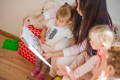
0-6 Months: High-Contrast and Soft Cloth Books
Newborns do not need complicated stories yet. They need bold images, simple shapes, gentle sensory input, and your voice.
The Montessori Newborn Contrast Book is perfect for this stage because the black-and-white images help babies practice focus, visual tracking, and attention during tummy time or quiet play. The soft cloth pages also make it safe for tiny hands - and very washable after inevitable baby chaos.
The Montessori Baby Cloth Book and Montessori Baby Soft Book add crinkly textures, soft pages, and simple sensory exploration. Babies can safely grab, squeeze, and stare at for surprisingly long stretches of time.
A classic like Black on White by Tana Hoban also works beautifully here, thanks to its bold, uncluttered imagery. In that light, the best Montessori books support early visual development, sensory exploration, bonding, and language exposure without overstimulating your baby.
6-12 Months: First Image Books and Touch-and-Feel Exploration
Around this age, babies start becoming tiny detectives. They point, grab, chew books like little beavers, and stare at pictures like they’re solving a mystery.
The Montessori Genius Giraffe Book works beautifully here because it introduces simple first images, bright visuals, and familiar objects. Babies are able to start recognizing and naming with you.
The Montessori Baby Soft Barn adds touch-and-feel play into the mix with soft textures, farm imagery, and sensory elements. Your kid can safely explore with their hands and mouth.
Books like Global Babies and Look Look! also fit this stage well because they combine real photography with clear, engaging visuals that babies can focus on without overstimulation.
1-2 Years: Naming Books and Everyday Life
This is the age where toddlers suddenly want to name absolutely everything. Dog. Shoe. Banana. Other banana.
The Montessori Magic Reusable Book is great for this stage because toddlers can draw, explore, and repeat simple activities without pressure. The Montessori Sticker Busy Book adds hands-on matching and everyday-life themes that help build vocabulary, focus, and fine motor skills.
Books like Big and Little by Margaret Miller also work beautifully because toddlers love simple, real-world comparisons they can actually understand.
2-3 Years: Storytelling, Routines, and Seasonal Books
Toddlers are born storytellers, but the skill really gets out there around 2-3 years. They remember routines, predict what happens next, and somehow demand the same book 14 nights in a row.
The Montessori Story Book helps children follow simple sequences and everyday stories, while the Montessori Reindeer Book, Montessori Santa’s Book, and Montessori Rabbit’s Book work beautifully in a seasonal corner tied to holidays, weather, and changes in nature.
Kids this age love books that connect to real moments in their world - even if that world currently revolves around snacks and refusing socks.
3-4 Years: Nature, Culture, and Real-World Curiosity
Around age three to four, children start asking the big questions. Why do leaves fall? Where do baby birds live? Why is the moon following the car?
This is a great age for nature books, cultural stories, and simple nonfiction. The Montessori Bible Storyboard works especially well for faith-based families because it introduces stories visually and in a hands-on way that children can actually follow.
Books like A Seed Is Sleepy and Children Around the World also fit beautifully here because they feed curiosity without overwhelming young children with too much information at once.
4-6 Years: Early Literacy, Readers, and Word Play
This is where many children suddenly become obsessed with letters, sounds, and trying to read cereal boxes in the grocery store.
The Montessori Spin and Spell Set, Montessori ABC Matching Cards, and Montessori Wooden Spelling Game help children practice letter recognition, early reading, and simple spelling through hands-on play instead of worksheets and pressure.
Books like On a Beam of Light and Maps are also wonderful at this age because children become deeply curious about the wider world and love learning real facts they can talk about endlessly at dinner.
How to Set Up a Montessori Bookshelf at Home
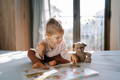
To set up a Montessori bookshelf at home, keep books low, front-facing, and easy for your child to access independently.
That means covers facing outward instead of packed spine-out like a grown-up bookshelf. Young children choose books visually, so seeing the cover helps them pick and engage with books on their own.
You also do not need a massive library out at once. Around 5-10 books is usually plenty. Rotate them weekly so the shelf stays interesting without overwhelming your child - or your living room.
A good mix usually includes:
- Read-aloud favorites
- Self-look picture books
- Practical-life or nature books
Store extra books in a basket, cabinet, or lidded box nearby for easy rotation.
The goal is to create a calm space where books actually get used instead of being ignored next to 46 plastic toys making dinosaur noises.
Why Read Daily (Even at 0-1 Year)
Yes, reading to a newborn who looks deeply confused by everything is still worth it.
The AAP recommends shared reading from birth because even very young babies benefit from hearing language, watching facial expressions, and listening to the rhythm of your voice. Those tiny daily moments help support vocabulary development, attention span, emotional attachment, and early brain development long before your child says their first word.
And no, you do not need an hour-long bedtime routine worthy of an award-winning parenting documentary.
Even 10 minutes of daily reading during the first two years can have measurable effects on language development and school readiness later on.
Some days, your baby will stare lovingly at the pages. Other days, they’ll try to eat the corner of the book. Both count.
FAQ
Are fairytales allowed in Montessori?
Yes, Montessori classrooms usually focus on reality-based books before age six, but most families still enjoy occasional fairytales and fantasy read-alouds at home.
Is Eric Carle Montessori?
Mostly, yes. Books like The Very Hungry Caterpillar work well because they teach sequencing, nature, and real-world concepts in a simple way.
How many books should a Montessori child have?
Around 5-10 books at a time is usually ideal. Rotate them regularly instead of keeping huge numbers on the shelf.
Are board books better than picture books?
For babies and toddlers, yes. Board books and cloth books are easier to hold, safer to explore, and much harder to destroy.
When can I introduce chapter books?
Around age six. This is when children usually become ready for longer stories, fantasy worlds, and more complex plots.
Conclusion
Reading with your child is honestly one of the most Montessori things you can do. It builds language, connection, focus, curiosity, and calm moments together. Even when your toddler insists on reading the same tractor book for the 900th time.
And remember: a Montessori bookshelf is supposed to evolve. You do not need to build the perfect library overnight. Start small, rotate books as your child grows, and follow their interests along the way.
If you want to build a bookshelf that matches your child’s stage of development, explore Montessori Generation’s full Montessori books collection for newborns, toddlers, and early readers.

Free Delivery
Over $80

Easy Returns
No questions asked

Unbeatable Warranty
1-year ++ warranty
 Secure CheckoutWorld’s most secure payment method