


30 Screen-Free Games for Toddlers at Home (Sorted by Age & Energy Level)
It’s 4:32 pm, and your toddler has already played with the same blocks and puzzles 14 times. They rejected three snacks, climbed the couch like a mountain goat, and are now asking for TV with the emotional intensity of a hostage negotiator.
We’ve all been there.
Playing with toddlers at home does not have to be fancy or educationally perfect. Toddlers are usually happy with simple, silly, repetitive activities. Toddlers mostly want movement, repetition, attention, and something mildly chaotic involving socks.
And honestly, games are not “just” a way to survive the afternoon. Play helps toddlers build motor skills, attention span, problem-solving, emotional regulation, and confidence - especially through simple, screen-free interaction.
So instead of one giant overwhelming list, we sorted these 30 screen-free toddler games by what you actually need right now: high-energy movement, calm-down moments, no-prep games, independent play, and sibling-friendly activities.

Why Screen-Free Games Matter (Without the Guilt)
Screen-free games for toddlers matter because play is how toddlers build attention spans, motor skills, language, emotional regulation, and problem-solving skills. What looks like “just running around the living room” is actually serious developmental work for a toddler's brain.
According to the American Academy of Pediatrics, children under 18 months should avoid screens except for video chatting. Also, kids ages 2-5 should generally stay around one hour of high-quality screen time per day. But the bigger goal is not raising a “zero-screen” child. It is making sure toddlers also get enough real-world play, movement, and interaction.
The NAEYC’s research on playful learning also highlights that young children need daily unstructured play to support healthy development, ideally at least 60 minutes each day.
And honestly, occasional screens are not the enemy. Sometimes you need to make dinner without someone licking the dog.
If you want a balanced approach, we also have a great guide on children and screen time.
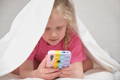
How This Article Is Sorted: 5 Game Types for Toddlers
We organized these games for toddlers at home into five real-life categories. Because nobody wants to scroll through 4,000 words while a toddler is hanging upside down off the couch yelling, “WATCH THIS.”
- High-Energy Movement - for the “tiny caffeinated raccoon” phase.
- Calm-Down Games - for the legendary 5 pm meltdown.
- 90-Second No-Prep Games - because you are tired too.
- 15-Minute Independent Games - for emails, laundry, or simply sitting down.
- Sibling-Friendly Games - so the older child stops declaring everything “baby stuff.”
Basically, this is less “Pinterest parent of the year” and more “what actually works on a random Tuesday.”
High-Energy Movement Games for Toddlers at Home
These are for the moments when your toddler starts sprinting through the hallway like they just discovered espresso.
Every game also includes quick tags to help you choose fast:
AGE / ENERGY / SETUP TIME / SUPPLIES
1. Pillow Obstacle Course - 1.5-4y / high / 2 min / pillows
Throw pillows on the floor and create jumping, crawling, and climbing zones. Great for balance, coordination, and burning pure chaos energy.
2. Sock Snowball Fight - 2-4y / high / 1 min / socks
Roll socks into “snowballs” and let the battle begin. Builds throwing coordination while keeping your lamps mostly safe.
3. Frozen Statues - 2-4y / high / 0 min / music
Dance wildly. Freeze dramatically. Repeat 46 times. This game helps toddlers practice impulse control and listening skills without realizing it.
4. Tape-Line Balance - 1.5-4y / med-high / 2 min / painter’s tape
Tape a line across the floor and challenge them to balance, hop, or tiptoe across it. Amazing for body awareness and coordination.
5. Animal-Walk Relay - 2-4y / high / 0 min
Crab walk. Bear crawl. Frog jump. Toddlers love pretending to be animals, and these movements strengthen gross motor skills fast.
6. Couch-Cushion Lava - 2-4y / high / 3 min / cushions
The floor is lava. Obviously. Jumping between cushions helps with balance, spatial awareness, and problem-solving.
7. Indoor Follow-the-Leader - 2.5-4y / med / 5 min
March, spin, stomp, crawl. Simple movement imitation supports attention and sequencing skills.
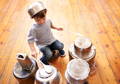
8. Kitchen Drum Circle - 1.5-3y / high / 1 min
Hand them wooden spoons and let the tiny concert begin. Rhythm play supports coordination, timing, and sensory exploration. If you want a less “pots-and-pans-at-maximum-volume” version, the Montessori Percussion Set and Montessori Music Set are great upgrades.
For more movement ideas, you can also check this helpful guide on gross motor activities for toddlers.
Calm-Down Games for the 5 pm Meltdown
You know the hour. Everyone is tired, dinner is half-started, and your toddler suddenly cries because their banana “broke wrong.” These calm-down games help slow the chaos without needing a full sensory cave in your living room.
Before we start with games, it’s a good idea to check this guide on quiet time with Montessori.
1. Flashlight Shadow Puppets - 2-4y / low / 1 min / flashlight
Turn off the lights, shine a flashlight, and make silly shadows on the wall. Calm visual focus helps toddlers regulate overstimulation.
2. Slow-Pour Water Transfer - 1.5-4y / low / 2 min / 2 cups + tray
Just pouring water back and forth can hold a toddler's attention forever. This builds concentration, coordination, and calming repetitive movement.
3. Soft-Touch Identification - 2-4y / low / 0 min
Ask your child to find “something soft,” “something fuzzy,” or “something smooth.” Great for sensory processing and redirecting big emotions.
4. Bubble Breathing Game - 2.5-4y / low / 2 min / bubbles
Slow blowing naturally encourages deeper breathing. Toddlers think they are playing. You are secretly helping nervous systems reset.
5. I Spy - Calm Version - 2.5-4y / low / 0 min
Keep it quiet and slow: “I spy something blue.” This supports attention and emotional regulation without adding more stimulation.
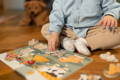
6. Cosmic Puzzle Time - 2-4y / low / 3 min / puzzle
Dim the lights and bring out one simple puzzle. Quiet puzzle work helps toddlers settle their bodies and focus their minds. The Montessori Happy Puzzles 6 Pack and Montessori Wooden Puzzles 4 Pack work especially well for this kind of calm play.
We also found out that responsive play helps toddlers gradually learn emotional regulation skills.
90-Second No-Prep Games
These are the “I have absolutely nothing planned, and somebody is losing it” games. No setup, no craft drawer, no emotional preparation required.
1. Color Hunt Around the Room - 2-4y / med / 0 min
“Find something green!” Simple movement games like this build vocabulary and observation skills fast.
2. Whisper Telephone - 2.5-4y / low / 0 min
Whisper silly phrases back and forth. Toddlers LOVE the drama of whispering for absolutely no reason.
3. What’s Missing Tray Game - 3-4y / low / 1 min
Place three objects on a tray, hide one, and ask what disappeared. Great for memory and attention skills.
4. Spoon Balance Race - 2-4y / med / 1 min
Balance a sock or pom-pom on a spoon and walk carefully across the room. Coordination + concentration = toddler Olympics.
5. Clap-the-Pattern - 2-4y / low / 0 min
Clap-clap-pause. Let them copy you. This supports listening, sequencing, and rhythm.
6. Body-Part Simon Says - 1.5-4y / med / 0 min
“Touch your knees!” “Touch your ears!” Fast, silly, and surprisingly good for body awareness and listening skills.

15-Minute Independent Games
Sometimes you need a few uninterrupted minutes to answer an email, switch the laundry, or drink coffee while it is still legally considered “hot.” These independent toddler games help build focus without needing constant adult involvement.
1. Sticker Mosaic - 2-4y / low / 2 min
Give toddlers paper and stickers and let them go wild. Peeling and placing stickers builds fine motor control and concentration. The Montessori Sticker Busy Book works especially well for this age.
2. Solo Block Build - 2-4y / med / 1 min
Challenge them to build a tower, bridge, or “zoo.” Open-ended building supports creativity, spatial awareness, and problem-solving. The Montessori Building Blocks and Montessori Brain Blocks are great for independent play.
3. Sensory Bin With One Tool - 2-4y / med / 5 min
Rice + scoop. Beans + spoon. That’s it. Toddlers do not need a themed construction-site sensory experience.
4. Threading Large Beads or Pasta - 2.5-4y / low / 3 min
Threading activities strengthen the hand muscles needed later for writing skills. The Montessori Rainbow Beads make this easier for little hands.
5. Container-and-Lid Matching - 1.5-3y / low / 2 min
Give them random containers and matching lids. Weirdly entertaining. Also excellent for problem-solving.
6. Dot-Marker Page - 2-4y / low / 1 min
Simple dot markers on paper can buy you a shocking amount of peace and quiet.
For more ideas like these, check out our practical tips on independent play for toddlers.

Sibling-Friendly Games
Finding a game that works for both a toddler and an older sibling is, let’s face it, harder than it seems. But, these games keep everyone involved without somebody yelling, “THAT’S NOT FAIR.”
1. Beanbag Toss - 2-6y / med / 2 min
Move the target closer for younger kids and farther away for older ones. Easy. Adjustable. Minimal sibling drama. The Montessori Bowling Set and Montessori Golf Set are great upgrades for active group play.
2. Cooperative Tower - 2-6y / med / 1 min
Instead of competing, everyone works together to build the tallest tower possible. Great for teamwork, patience, and “accidentally” learning turn-taking.
3. Family-Sized Scavenger Hunt - 3-6y / med / 5 min
Send kids searching for things like “something round” or “something soft.” Older siblings can help younger ones instead of arguing with them for once.
Restaurant Pretend Play - 2-6y / low / 5 min
One child takes orders, another cooks, and someone dramatically complains about soup quality. Pretend play builds language, creativity, and social skills. The Montessori Tea Set works perfectly for this kind of setup.
For more ideas on helping kids play well together, read this helpful guide on playing together as siblings.
FAQ
What games can I play with a 2 year old at home?
Simple movement and sensory games usually work best. Things like pillow obstacle courses, color hunts, bubble games, sticker activities, and pretend play are easy to set up and actually hold toddler attention.
How do I entertain a toddler without TV?
The easiest approach is rotating between movement games, calm-down activities, and independent play. Toddlers do not need elaborate setups - they mostly want interaction, repetition, and something hands-on.
What is a good calm-down game for toddlers?
Bubble breathing, flashlight shadow puppets, simple puzzles, and slow water transfer games work especially well when toddlers are overstimulated or heading into meltdown mode.
Can toddlers play games with rules?
Yes - but keep rules extremely simple. Games like Simon Says, Freeze Dance, or Follow-the-Leader help toddlers practice listening and turn-taking without making things too complicated.
How long should a toddler game last?
Honestly? Sometimes 3 minutes. Sometimes 20. Most toddlers do best with short, flexible activities that can switch quickly based on energy and attention span.
Conclusion
The best games for toddlers at home are usually the simplest ones - the games you can start in under two minutes while your child is halfway upside down on the couch.
You do not need a perfect playroom or a Pinterest-worthy setup. A few pillows, socks, cups, stickers, or simple puzzles can go a very long way.
Bookmark this list for the next rainy afternoon, sick day, dinner-prep meltdown, or “we’ve already watched Bluey three times” moment. And if you want easy grab-and-play options, Montessori Generation’s Puzzles & Brain Games Collection and Busy Toys Collection are full of toddler-friendly activities designed for exactly these moments.

Free Delivery
Over $80

Easy Returns
No questions asked

Unbeatable Warranty
1-year ++ warranty
 Secure CheckoutWorld’s most secure payment method