


How to Support Counting with Montessori Toys (Ages 1-6+)
Most parents think teaching counting means getting their kid to proudly shout “1, 2, 3” before they can even put on their shoes. Feels like progress… but it’s a bit of a trap.
Saying numbers is one thing, but understanding them is a totally different picture.
Real math starts way earlier, when a child realizes what “two cookies” actually means (and more importantly, that two is never enough). That’s where number sense begins.
The Montessori approach leans into this. There’s no pressure, no drills, no worksheets here. Just hands-on play that helps kids see, touch, and get a sense of numbers.
So instead of rushing to teach counting, we focus on something better: helping kids understand what numbers really are.
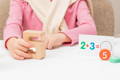
How Counting Develops the Montessori Way
Counting grows step by step, and it starts much earlier than most people think.
At first, children explore through their senses, touching, grabbing, dropping, and stacking. This is where early math begins. They notice differences like more vs less, big vs small.
Then patterns start to stand out. Repetition catches their attention. Two blocks here, two there. The order slowly begins to make sense.
Next comes understanding quantity. This is a big moment. A child starts to connect a word like “three” with three real objects they can see and touch.
After that, numbers and quantities come together. When they say “three,” they can point to three items with intention.
From there, simple operations appear naturally, like adding one more, taking one away, and comparing groups.
The key idea is simple: real understanding comes from seeing, touching, and interacting with objects.
Age 1: Exploring Quantity Through the Senses
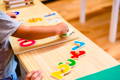
At age one, math looks like play, which it really is when you take a closer look. So naturally, this is where tools like the Montessori Squeaky Block Set come in. Soft, safe, and made for little hands, these blocks are all about exploration.
Babies squeeze them, chew them (yes, teething life), stack them, and knock them over again.
But what’s actually happening here is much bigger than it looks.
Your child is:
- Exploring different textures and shapes.
- Learning cause and effect (stack, fall, then repeat).
- Building early awareness of “more” and “less.”
The blocks even include numbers, animals, and patterns, but at this stage, those are just visual exposure, not something to learn or memorize.
You might notice your child holding two blocks, then reaching for another. Or stacking one, then two, then three, before it all crashes down. That’s early quantity awareness starting to form.
This stage is all about building the foundation. Before numbers mean anything, children need to feel, see, and experience the world around them.
Age 2-3: Recognizing Numbers and Patterns
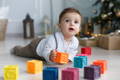
Around age two, things start to click, not fully, but you can see the gears turning. With a toy like the Montessori Penguin's Clock, children begin to recognize numbers as something familiar.
They may not understand them yet, but they know “this piece goes here.” This is where key skills start to build:
- Matching shapes to the correct spots.
- Beginning to notice that numbers and shapes follow patterns and sequences.
- Pointing to numbers when asked.
- Imitating counting during play.
You’ll see a lot of trial and error here. A child might try to place the “3” in the wrong spot, pause, then adjust. That’s problem-solving in action. Sequencing also begins to develop. The clock format introduces the idea that numbers have an order and position.
What’s important to understand: this stage is still early. Recognition is there, but understanding is not stable yet.
So if your child says “1, 2, 5, 7”… you’re not behind. You’re right on track.
Age 3: Connecting Numbers to Quantity
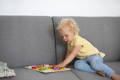
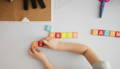
Counting finally starts to make sense at around age three. This is the stage where kids move from “saying numbers” to actually understanding what those numbers represent. And a tool like the Montessori High Five Math helps bridge that gap in a very clear, hands-on way.
What changes is that now children begin to count objects one by one, and this is where one-to-one correspondence comes in. That simply means each number matches one object.
You’ll see things like:
- Touching each block while counting.
- Slowing down to keep track (“one… two… three…”).
- Restarting when they lose count (very normal).
With interactive elements like movable pieces and counting fingers, kids can see what happens when numbers change. For example, taking two away and noticing there are fewer objects left. That’s the start of understanding addition and subtraction in a real, physical way.
This is the moment counting becomes meaningful. When numbers stop being words and start representing something real, your child can see, touch, and control.
Age 4: Building Early Math and Problem-Solving Skills
By age four, things are more “math-like”, but still through play, not pressure.
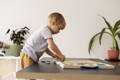
The Montessori Smart Board is a way to go here. With this toy, children begin to combine what they already know into something bigger.
Here’s what you’ll notice:
- Grouping objects by color, shape, or number.
- Comparing quantities (“this has more, this has less”).
- Recognizing patterns and completing them.
- Trying simple addition without even calling it that.
For example, a child might place two pieces here, add one more, and pause… then realize there are now three. That moment of figuring it out? That’s real learning.
The board’s mix of sorting, matching, and interactive elements (like the magnetic fishing game) keeps things dynamic. Logic also starts to develop here. Children begin asking questions like “What fits here?” or “What comes next?” Even if they don’t say it out loud, you can see the thinking happening.
This stage is less about getting answers right and more about learning how to think. And that’s the real goal, building confidence in solving problems, one small discovery at a time.
Age 5: Applying Counting in Real Situations
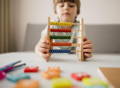
Around age five, kids start to use counting as we do for everyday challenges. That’s why toys like the Montessori Ready for School Game help children begin to use numbers as tools.
You’ll see this in simple ways:
- Counting pieces to complete a task.
- Following the game rules that involve numbers.
- Solving small challenges (“How many more do I need?”).
- Using counting to win, finish, or move forward.
Games add something important here: purpose.
Now counting has a reason. It helps them complete the maze, solve a card, or beat the timer. That shift makes a huge difference in motivation and focus.
You’ll also notice more independence. Kids start checking their own answers, adjusting when something doesn’t work, and trying again without needing constant help.
At this stage, math becomes part of real life. It shows up in play, routines, and small decisions.
And the more it shows up naturally, the more confident your child becomes using it.
Age 6+: Moving From Counting to Real Math
When kids turn 6, counting becomes something they can rely on. This is not an activity that’s fast, flexible, and part of how they think.
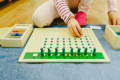
To combine it with games, it’s recommended to find something that’s both interesting and educational, like Montessori Number Knockdown. With this toy, learning moves into a more active and applied stage.
Here’s what starts to develop:
- Stronger number fluency (recognizing and using numbers quickly).
- Mental math (adding numbers without needing to count each one).
- Confidence in solving small challenges independently.
The gameplay naturally pushes this forward. A child rolls the dice, gets a number, and then figures out different ways to match it. For example, rolling an 8 could mean flipping down 8… or combining 5 + 3, 6 + 2, and so on.
That flexibility is key. It shows that numbers can be broken apart and combined in different ways. At the same time, there’s a physical side to it. Flipping tiles, rolling dice, and reacting quickly, it all keep the learning active and engaging.
Math at this stage feels less like learning and more like playing a smart game.
Why Montessori Toys Work for Counting
Montessori toys work because they let kids figure things out with their hands. When a child moves objects, stacks blocks, or flips number tiles, they’re testing ideas. That’s hands-on learning, and it sticks way better than just hearing “this is five.”
Another big win? Self-correction.
Most Montessori toys are designed so kids can see when something doesn’t fit or doesn’t work. No need for constant “No, that’s wrong.” They adjust, try again, and learn faster because of it.
Then there’s repetition, and kids love it. Doing the same activity over and over might look boring to adults, but for a child, it’s how skills lock in.
And finally, independence.
Instead of waiting for instructions, kids explore, experiment, and solve things on their own. That builds real confidence, not just in math, but in thinking.
Simple idea:Children learn best by doing. Montessori just leans into that.
Common Mistakes Parents Make
- Pushing counting too early: If a child is still exploring and stacking, jumping straight into counting can skip the foundation. Without understanding quantity first, numbers It’s easy to rush this stage, especially when counting feels like something kids should “get” quickly. But a few small habits can slow things down without you realizing it. Don’t really stick.
- Focusing on memorization: Hearing a child recite “1–10” sounds great… but it doesn’t mean they understand what those numbers represent. Real learning happens when they connect numbers to actual objects.
- Correcting constantly: It’s tempting to jump in with “No, that’s wrong.” But too much correction breaks confidence. Kids learn faster when they can try, adjust, and figure things out on their own.
- Using worksheets too soon: Worksheets look like learning, but at this stage, they often skip the hands-on part kids need most. Without real interaction, numbers stay abstract.
A good rule: slow down, follow your child’s pace, and let learning happen through play.
How to Support Counting at Home
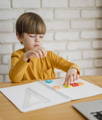
Counting fits naturally into everyday life, so you don’t need special lessons or a “math time” block. Start simple. Count things your child already interacts with:
- “Let’s grab 3 apples.”
- “You have 2 socks left.”
- “Can you give me 4 blocks?”
These small moments build real understanding because numbers are tied to something real. Bring your child into daily tasks. Cooking, cleaning, and setting the table all of these involve counting. It feels like helping, but it’s actually learning.
Repetition matters, but keep it natural. Kids don’t need drills. They need to hear and see numbers again and again in different situations.
Most importantly, follow their interests. If your child is lining up cars, count the cars. If they’re building towers, count the blocks. That’s where attention is closest, and learning sticks best.
For many young children, simple everyday interactions can be more meaningful than formal lessons at this stage.
Conclusion
Counting builds over time, step by step. From squeezing blocks at age one to solving simple problems at six, each stage plays a role. Building skills gradually creates a stronger foundation for later math learning. When children move through these stages naturally, their understanding becomes much stronger.
The biggest takeaway? Play is not a break from learning; it is the learning. Through hands-on experiences, repetition, and real-life moments, children build a deep understanding of numbers that actually sticks.
Before children can count numbers, they need to understand what numbers mean.

Free Delivery
Over $80

Easy Returns
No questions asked

Unbeatable Warranty
1-year ++ warranty
 Secure CheckoutWorld’s most secure payment method