


The Best Walking Toys for Babies Learning to Walk (2026 Montessori Guide)
Walk into any baby store, and you’ll see an entire parking lot of “walkers.” Some blink, some play music, some look like tiny race cars. And somehow, every box claims it will help your baby walk faster. Helpful? Not exactly. Exhausting? Absolutely.
Know this: not all baby walkers work the same way. Sit-in walkers have raised safety and developmental concerns for years, which is why the American Academy of Pediatrics has pushed for restrictions on them, while Canada banned them back in 2004.
At the same time, many pediatricians and movement specialists support push toys, pull toys, and other movement-based play that lets babies practice balance and coordination naturally
The right walking toys for babies support balance, coordination, and confidence, without doing the work for your baby. This guide will help you see which baby walking toys actually help, what to avoid, and the best Montessori picks for every walking stage.
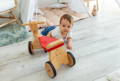
When Babies Start Walking - The Real Timeline
If your baby is not walking at 12 months, take a deep breath. Seriously. Baby milestones are not a race, even though every grandma at family dinner somehow turns them into one.
According to the CDC milestone guidelines, many babies start pulling to stand around 12 months, while independent walking often happens between 12 and 15 months. Some confident little speedsters start earlier. Others take their sweet time and walk closer to 18 months. Both can be completely normal.
The CDC also notes that by 15 months, many babies are beginning to take a few independent steps. What matters more than the exact month is steady progress. Cruising along furniture, squatting, standing briefly, falling dramatically like tiny soccer players, it all counts.
You can also check out these helpful Montessori toys for new walkers for ideas that support movement naturally.
But, it is worth talking to a pediatrician if your baby is not pulling to stand by around 12 months or not attempting independent steps by 18 months.

Why Sit-In Walkers Are Not Recommended for Learning to Walk
Sit-in baby walkers can look like a helpful step between crawling and walking, but pediatricians generally do not recommend them as a walking aid.
The main reason is simple: babies learn to walk by practicing balance, shifting weight, strengthening their legs and core, and figuring out how to control their own bodies. In a sit-in walker, much of that work is done by the seat and frame, so the movement does not fully match the way babies naturally learn to stand, cruise, and take first steps.
There is also a safety reason behind this recommendation. Because walkers have wheels, babies can move faster than they usually would at that stage. That can make everyday areas of the home harder to manage, especially around stairs, furniture edges, or anything within reach.
For this reason, the American Academy of Pediatrics recommends avoiding sit-in infant walkers, and Canada has banned their sale since 2004. This does not mean parents need to panic if they have already used one. It simply means that, based on what we know now, there are better ways to support early movement.
Safer and more useful options include tummy time, floor play, reaching for toys, pulling up, cruising along furniture, and using a stationary activity center when parents need a contained play option.
The goal is not to make walking happen faster. It is to give babies plenty of safe chances to build the strength, balance, and confidence they need when their bodies are ready.
Push and Pull Toys vs. Sit-In Walkers
Push toys for babies and pull toys are distinctly different from sit-in walkers from sit-in walkers, in a good way. A push toy is exactly what it sounds like: your baby stands behind it and pushes it forward using their own legs, balance, and body weight.
Think little carts, wagons, or weighted walkers that move slowly and steadily. The key word here is weighted. A good push toy should not shoot across the kitchen like a shopping cart with one bad wheel.
Sit-in walkers work differently. Babies are suspended in a seat with their feet touching the floor, which means they are not fully balancing or supporting their own body naturally. According to Physical Therapy for Infants, push toys better support the natural mechanics of walking because babies practice shifting weight, balancing, and coordinating movement themselves.
That idea fits closely with the Montessori principle of freedom of movement: the body learns by doing the work.
If you want more ways to support movement naturally, these gross motor activity ideas are a great place to start.
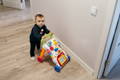
The 4 Stages of Walking Readiness with MG Picks
Every baby learns to walk a little differently. Some wobble across the living room at 10 months, others spend months cruising sideways along the couch first. Both are normal.
The goal is to support the stage your child is already in.
Stage 1 (7-10 Months): Pulling Up
At this stage, babies are pulling themselves upright using couches, coffee tables, your legs, and occasionally things that absolutely should not be climbed.
This is not the time for a walker yet.
What babies need most here is stable support: low furniture, sturdy bars, floor cushions, and plenty of safe space to practice standing and squatting. These early movements build leg strength and balance naturally.
Stage 2 (9-13 Months): Cruising
Cruising is the adorable sideways shuffle phase. One hand on the couch. One giant step. A dramatic sit-down. Repeat.
This is where simple movement toys start becoming useful. The Montessori Carrot Wheels help babies explore cause and effect while encouraging reaching, grasping, and controlled movement. The Montessori Silicone Pulling Toy works well for little hands that want to pull, tug, and investigate everything within a 3-foot radius.
A weighted basket-on-wheels or cruising rail can also help during this stage.
Stage 3 (10-15 Months): First Steps
This is the stage where many parents start looking for toys to help baby walk safely. Here, it’s best to use stable push toys with wheel resistance or a weighted base. That safety feature matters because lightweight push toys can move too fast and throw babies off balance.
The Montessori Pulling Snail and Montessori Roaring Roller are great transition toys here because they encourage movement while still feeling playful and low-pressure.
You can also explore more motor skills toys that support coordination and balance naturally.
Stage 4 (13-18 Months): Confident Walker
Once babies are walking confidently, many parents start shopping for walker toys for 1 year old toddler. Because suddenly your child can carry objects, change direction, squat mid-walk, and somehow reach things you thought were impossible to reach.
This is the perfect stage for outdoor movement toys and beginner balance play. The Montessori Baby Balance Bike is one of the best baby balance bike options for toddlers learning balance and coordination naturally.
For pretend play mixed with movement, the Montessori Petrol Station and Montessori Smart Safari Bus turn walking into a full-body activity instead of just “getting from point A to point B.”

Setting Up a Safe Walking Environment
Babies learning to walk need clear, open pathways with enough space to wobble, squat, fall, recover, and try again. A few simple changes at home make a huge difference:
- Clear walking pathways with fewer obstacles.
- Avoid rugs that bunch up or catch wheels.
- Use low furniture as a natural cruising rail.
- Add a simple pull-up bar at hip height if possible (a mounted wooden dowel works great).
- Keep floors barefoot-friendly for better balance and grip.
- Choose push toys with wheel resistance or a weighted base.
- Install stair gates as soon as cruising begins - seriously, this one is non-negotiable.
Barefoot walking indoors is especially helpful because babies can feel the floor properly and adjust their balance naturally. Tiny feet are basically built-in sensors.
If you are creating a movement-friendly setup at home, this guide on how to set up a Montessori bedroom for a one-year-old has plenty of practical ideas.
FAQ
Do walking toys help babies walk faster?
Not really, and that is completely okay. Parents often search for learn to walk toys, but babies learn to walk when their muscles, balance, and coordination are ready. Good walking toys support practice and confidence.
Are sit-in walkers safe?
The American Academy of Pediatrics recommends avoiding sit-in walkers because of injury risks and concerns about delayed walking mechanics. Push toys with a weighted base are considered a much safer option.
At what age can a baby use a push walking toy?
Most babies are ready for push toys somewhere between 9 and 15 months, depending on their stage. Cruising confidently along furniture is usually a good sign they are getting ready.
What is the best first walking toy?
The best push walker is one with a weighted base. Lightweight toys that slide too fast can make new walkers feel like they accidentally joined a NASCAR event.
Should I worry if my 12-month-old is not walking?
Usually, no. Many completely healthy babies walk closer to 15-18 months. What matters most is steady progress like pulling to stand, cruising, and attempting movement.
Conclusion
Learning to walk is messy, wobbly, hilarious, and honestly a little chaotic. That is exactly how it is supposed to look. Good Montessori walking toys support natural movement instead of rushing milestones.
The best baby walking toys support your child’s natural development instead of rushing it. Safe push toys, pull toys, and balance-focused play help babies build confidence one tiny step at a time.
If you are looking for movement toys that actually match real development stages, the Montessori pull toys are excellent places to start. Trust the timeline - your baby is learning more with every wobble than it may seem.

Free Delivery
Over $80

Easy Returns
No questions asked

Unbeatable Warranty
1-year ++ warranty
 Secure CheckoutWorld’s most secure payment method