


Best Montessori Toys for Newborns (0–3 Months): An Informed Parent Guide
Newborns do not need a mountain of toys. In the first few months, most babies are completely fascinated by things adults stopped noticing years ago (a curtain moving in the wind, a patch of sunlight).
That is exactly why the best Montessori toys for newborns are usually very simple. A bold black-and-white contrast book, a gentle ocean life mobile, or a soft grasping toy can do far more than a flashing plastic gadget that sounds like an amusing park.
At this stage, babies are not looking for entertainment. They are busy learning how to see, focus, move their hands, and slowly understand the world around them. Good newborn toys support that development without overwhelming their senses - or your living room.
That’s why we’ll go through the best toys for 0-3 months across three developmental windows: 0-4 weeks, 4-8 weeks, and 8-12 weeks.
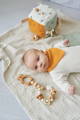
What a Newborn Can See and Sense in the First 3 Months
A newborn’s world is much blurrier than most people realize. Research from the American Academy of Pediatrics shows that babies in the first few weeks can only clearly focus on objects about 8-12 inches away.
That is basically the distance between your face and theirs during feeding, which explains why newborns spend so much time staring directly at you.
At this stage, vision is mostly monochromatic. Babies see bold contrasts much more clearly than soft pastel colors or busy patterns. That is why high-contrast cards, black-and-white shapes, and simple patterns work so well in the first weeks.
Peer-reviewed research on infant contrast sensitivity also shows that newborns naturally respond better to big visual differences than detailed images.
Around weeks 2-8, babies slowly begin noticing their first colors, especially red. Their eye movements also become smoother and more controlled by around 2-3 months.
This is why good Montessori newborn toys feel visually calm. A simple contrast book, a slow-moving Munari mobile, or gentle sensory toys for newborn development work with a baby’s vision instead of overwhelming it. At this age, less stimulation is usually the smarter choice.
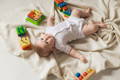
What Makes a Toy “Montessori” for a Newborn?
Good Montessori toys for newborns are usually much simpler than people expect. The goal is to support one small piece of development at a time without overwhelming their senses.
That is why most Montessori newborn toys focus on a single skill or sense. A high-contrast image supports visual tracking. A wooden rattle encourages grasping. A soft texture introduces gentle sensory exploration.
According to the Association Montessori Internationale (AMI), Montessori environments are designed to help children engage with the world in a calm, realistic, and developmentally appropriate way.
You will also notice that many Montessori-inspired newborn toys use natural materials like wood, cotton, or fabric instead of flashing plastic gadgets with lights and sounds. Visually, they stay simple too. High contrast, clean shapes, and uncluttered designs are easier for newborn eyes to process.
And maybe most importantly, good toys for this stage respect how tiny babies actually are. Everything should fit comfortably within their limited visual range, tiny grip, or early movements - not require Olympic-level coordination from someone who discovered their own hands three days ago.
Best Montessori Toys for Newborns: 0-4 Weeks
The first month is mostly about vision, comfort, and slow sensory discovery. At this stage, the best Montessori toys for newborns are simple, high-contrast, and calm enough to support development without turning your living room into a tiny baby nightclub.
1. Ocean Life Mobile for Early Visual Tracking
The Ocean Life Mobile is a calm, visually simple mobile made with soft felt sea creatures and natural wood pieces. Hang it about 8-12 inches from your baby’s face in a movement area or near the changing table, where they can quietly observe it.
In traditional Montessori, babies are introduced to the Munari, Octahedron, Gobbi, and Dancers mobile sequence. The ocean life mobile follows the same idea - slow, uncluttered visual stimulation that matches how newborn vision develops in the first weeks.
2. High-Contrast Contrast Book for Newborn Vision
In the first few weeks, babies see bold contrasts much more clearly than soft colors or busy patterns. The Montessori Newborn Contrast Book uses simple black-and-white images with small touches of red to support early visual focus and tracking without overstimulating newborn eyes.
It is made from soft cloth, safe for tummy time, and easy to attach near a crib or play area. And honestly, watching a newborn stare at one page like they just discovered modern art is part of the experience.
3. Soft Cloth Books for Calm Sensory Exploration
The Montessori Baby Cloth Bookadds gentle textures, crinkly sounds, and simple visuals that babies can explore during floor play or quiet time. The Jungle Adventure version keeps things playful without becoming visually chaotic, which honestly already puts it ahead of half the toy aisle.
Because it is soft, lightweight, and washable, it also works well for early grabbing, chewing, and tummy time moments when babies are still learning how their hands work.
4. Tummy-Time Mirror for Face Recognition and Focus
A simple mirror placed safely at floor height can turn tummy time from “absolutely unacceptable” into at least mildly interesting. Newborns are naturally drawn to faces, and seeing their own reflection encourages visual focus, head lifting, and longer tummy time sessions.
You do not need anything fancy here. A secure baby-safe mirror near a play mat works perfectly and fits the Montessori idea of simple, real-world exploration.
Best Montessori Newborn Toys: 4-8 Weeks
Around this stage, babies start becoming a little more intentional with their movements - and a lot more opinionated about being bored. This is when Montessori newborn toys that encourage grasping, gentle sensory exploration, and early hand-eye coordination start becoming much more interesting to them.
5. Soft Sensory Books for Early Grasping
Around 4-8 weeks, babies start reaching for things with the accuracy of someone trying to catch a mosquito in the dark. The Montessori Baby Soft Book gives them soft textures, crinkly pages, and simple Jungle-themed visuals they can safely grab, squish, and stare at like tiny, confused scientists.
It is also great for tummy time, where even touching one page feels like a major personal achievement.
6. Soft Grasping Companions for Comfort and Touch
The Baby Shower Gift Bunny is the kind of toy babies instantly decide is important for reasons no adult will ever fully understand. It is soft, lightweight, easy to grab, and almost guaranteed to get pulled dramatically across their face at least once a day.
Beyond the chaos, it helps babies practice gripping, touching, and exploring different textures in a calm, comforting way.
7. Wooden Rattle Kits for Hand Discovery
This is the stage where babies slowly realize their hands are not just random noodles floating near their body. The Montessori Rattle Kit helps them practice grasping and shaking with lightweight wooden rattles that make soft sounds instead of aggressively auditioning for a nightclub DJ set.
The simple design keeps babies focused on movement, coordination, and cause-and-effect instead of sensory overload.
8. Loveys and Transition Objects for Calm Connection
The Baby Guardian Butterfly works as a soft lovey that babies can cuddle, grab, and casually drool on during quiet moments. At this age, babies love familiar textures, and a lightweight comfort object can quickly become part of their little routine.
Also, for reasons science still cannot explain, babies treat soft loveys like celebrity guests the second they become emotionally attached to them.
Best Toys for 0-3 Months: 8-12 Weeks
By 8-12 weeks, babies start acting a lot less like sleepy potatoes and a lot more like tiny humans with opinions. Reaching, kicking, grabbing, and full-body wiggles suddenly become part of daily life.
9. Minimalist Newborn Play Gym for Reaching Practice
By 8-12 weeks, babies start reaching toward toys with real determination, and approximately the coordination of someone trying to unlock their phone while half asleep. The Montessori Play Gym gives them a calm space to practice batting, stretching, and tracking movement without dangling 47 plastic toys directly into their nervous system.
Keep just a few hanging objects at a time so babies can actually focus on what they are reaching for.
10. Floor Play Mats for Movement and Tummy Time
The Montessori Baby Play Mat creates a safe movement area where babies can kick, roll, stretch, and slowly discover their own feet now, too. At this stage, floor time matters because babies learn through movement, not by being parked in containers all day like tiny potatoes.
A simple mat also makes tummy time feel more comfortable and gives babies room to practice early motor skills safely.
11. Wooden Teethers for Early Mouth Exploration
Some babies start chewing on literally everything around this stage, including their own fists with shocking commitment. The Elephant Teether gives them a safe, easy-to-hold object for early mouth exploration while also supporting grip strength and coordination.
The natural wood design keeps things simple, lightweight, and much calmer than giant blinking teething toys that look like they belong in an arcade.
12. Topponcino and Other Comfort-Based Montessori Newborn Toys
A topponcino is a small Montessori-style cushion designed to help babies feel secure and supported while being held or moved. Montessori Generation does not currently carry one, but many parents choose a simple handmade or third-party version for cuddles, feeding, and calm transitions between arms, beds, and tummy time.
Basically, it is the closest thing babies have to a “please handle me gently, I just got here” pillow.
What to Avoid When Choosing Newborn Toys
Some newborn toys are way more stimulating than helpful. In the first 3 months, babies benefit from calm, simple experiences - not a full sensory rave at 2 a.m.
Things worth avoiding:
- Battery-powered light and sound toys: Flashing lights and loud sounds can easily overstimulate newborns and reduce focus.
- Crib aquariums and vibrating bouncers: Babies learn through movement and interaction, not passive containment.
- Plastic teethers without safety certifications: The CPSC recommends avoiding products with questionable materials or unsafe phthalates. Natural or certified non-toxic options are a safer choice.
- Play gyms overloaded with hanging toys: Newborns do not need eight spinning animals above their heads like they’re entering a tiny baby carnival.
- Stuffed animals in the crib: According to AAP safe sleep guidelines, soft toys should stay out of sleep spaces during the first year.
The Best Montessori Starter Bundle for First-Time Parents
Most newborns do not need dozens of toys. Honestly, a few thoughtful pieces that match their development stage will take you much further than an overflowing toy basket nobody can close anymore.
If you want a simple starting point, the Montessori Starter Bundle is one of the easiest ways to build a calm newborn setup. It includes the Baby Soft Book and the brand’s How to Create a Montessori Home guide, which helps new parents understand how Montessori actually looks in real daily life - not just on Pinterest.
For a more complete newborn setup, pairing the Newborn Contrast Book, Ocean Life Mobile, and Rattle Kit covers visual development, sensory exploration, and early grasping from the first weeks onward.
It also makes a genuinely thoughtful baby shower gift - especially for grandparents trying to impress first-time parents.
FAQ About Montessori Toys for Newborns
When can a newborn start playing with toys?
Babies can start interacting with simple newborn toys from birth. In the beginning, this mostly means looking at high-contrast images, tracking slow movement, and exploring soft textures.
Are high-contrast cards really helpful for newborns?
They are not mandatory, but they do match how newborn vision develops. Babies see bold black-and-white patterns much more clearly in the first weeks than soft pastel colors.
How many newborn toys does a baby actually need?
Honestly, not many. A few thoughtful Montessori toys for newborns - like a mobile, a contrast book, and one grasping toy - are usually more than enough at this stage.
Can newborns see color in the first few months?
Yes, but not very clearly at first. Babies begin noticing stronger colors like red between 2 and 8 weeks as their vision develops.
Are Montessori mobiles safe for newborns?
Yes, when used correctly. Mobiles should always hang securely out of reach and should never be placed directly inside the crib, where babies can grab them later on.
What is the single best first Montessori toy?
A simple high-contrast book is usually one of the best first choices. It supports visual development, works from birth, and somehow stays fascinating to babies longer than most adults expect.
Final Thoughts on Montessori Toys for Newborns
The first few months are not about buying more stuff. They are about creating calm, simple experiences that match how babies actually grow and develop. A few well-chosen Montessori newborn toys often do far more than an entire pile of loud plastic gadgets competing for your baby’s attention.
Trust your instincts, follow the developmental science, and remember that your presence matters more than any toy ever will. If you want a gentle starting point, exploring a simple 0-12-month Montessori collection can make those early weeks feel much less overwhelming.
And the nice part? These same principles will keep guiding you through the next 9 months.

Free Delivery
Over $80

Easy Returns
No questions asked

Unbeatable Warranty
1-year ++ warranty
 Secure CheckoutWorld’s most secure payment method