


The 12 Best High-Contrast Baby Books (Why They Matter + Top Picks 0-6 Months)
You spent hours picking cute nursery colors. Your newborn couldn't care less.
Right now, your baby sees the world very differently than you do. In the first few months, they can only see clearly about 8-12 inches in front of them - about the distance between your face and theirs during a feed. Everything else is blurry.
That's why high contrast baby books and other black and white books for babies work so well. Those bold black-and-white pictures are much easier for newborn eyes to see than colorful, detailed images. It's not about style. It's about how babies are built.
So, let us explain the science behind newborn vision, show you what makes a great high-contrast book, and share 12 of our favorite picks for babies from birth to 6 months. We'll also answer common questions about color vision, reading time, and choosing your baby's very first book.

The Science Behind High-Contrast Baby Books
In the first few weeks, babies can only see clearly about 8-12 inches (20-30 cm) away. That's roughly the distance between your face and theirs during a feed. According to the American Academy of Pediatrics (AAP), this is the range where newborns see best.
Color takes time, too. At first, babies mostly see light, dark, and strong contrasts. As their vision develops, red is often one of the first colors they start to notice. By around 5 months, most babies can see a much wider range of colors, according to the American Optometric Association.
What newborns really love is contrast, hence the infant vision books. Big black shapes on a white background are much easier for them to see than soft colors or busy pictures. Research shows that a newborn's ability to see contrast is far lower than an adult's, but it improves quickly during the first months of life (Atkinson et al.).
That's why high-contrast books work so well. They give babies something clear to focus on while their eyes and brains are developing. Every time your baby looks at a bold pattern, they're practicing one of the most important skills they'll use for the rest of their life - seeing.
Want to learn more? Take a look at our visual learning guide for newborns.
Why High-Contrast Books (Not Just Cards) Matter
Don't get us wrong - high-contrast cards are great. They're easy to place in your baby's visual area, prop up during tummy time, or use for a few minutes of focused looking.
But books do something cards can't.
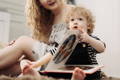
A book turns visual stimulation into a shared experience. Your baby isn't just looking at black-and-white pictures. They're hearing your voice, watching your face, and spending time close to you. That's a powerful combination.
In fact, research recommends reading to babies from birth. Shared reading helps support early language development, strengthens the parent-child bond, and creates positive reading habits long before a child understands the words on the page.
The funny thing is, your newborn has no idea you're "reading." They don't care about the story yet. What they care about is seeing bold pictures, hearing a familiar voice, and being close to you.
That's why high contrast books for babies are such a smart first purchase. They support visual development today while helping build a love of books that can last for years.
What to Look For in a High-Contrast Baby Book
To start with, look for five things: bold black-and-white images, simple pages, sturdy materials, non-toxic inks, and a size that's easy for little hands to hold.
Yeah, the best high-contrast books use large, simple images with plenty of white space. A single animal, face, or shape is much easier for a newborn to see than a busy page full of details.
A touch of color can help, too. Black and white should do most of the work, but strong accent colors like red become more useful as your baby's vision develops.
Next, check the material. For babies under 6 months, cloth books and sturdy board books are usually the safest choice. Regular paper pages can tear easily and aren't made for grabbing, chewing, and drooling.
It's also worth looking for child-safe materials and non-toxic inks. Our guide to non-toxic baby toys explains what these safety standards mean.
And finally, make sure the book is easy to hold - because sooner or later, it's going straight into your baby's mouth.
The 12 Best High-Contrast Baby Books with MG Picks
Most families will do just fine with one or two good options, but which ones are they?
We've included a mix of classic favorites, soft sensory newborn books, and Montessori-inspired picks. Some are the best baby books 0-6 months, while others become more useful as your baby starts grabbing, tracking, and exploring the world around them.
Best High-Contrast Baby Books for 0-3 Months (Visual Development Stage)
This is the phase where your baby sleeps a lot, but the time when it’s awake, every moment counts.
1. Montessori Newborn Contrast Book
This is where you should start. The Montessori Newborn Contrast Book uses bold black-and-white illustrations designed specifically for newborn vision, with four adorable themes to choose from: Crab, Ladybug, Koala, and Owl.
The images are simple, clear, and easy for young babies to focus on. It's also lightweight and easy to use during tummy time, feeding sessions, or quiet moments together.
2. Black on White by Tana Hoban
This classic has been helping babies explore visual patterns for decades. Each page features a simple black image on a white background, so newborns can see and track with ease.
There's no story to follow, which is exactly why it works so well at this age. Babies can focus on one shape at a time without visual overload.
3. Look Look! by Peter Linenthal
This one is filled with pages that use bold black-and-white images with small touches of color. Now this gives babies what they need to develop visually.
Unlike many newborn books, this one grows with your baby. At first, they'll focus on the strong contrasts. A few months later, they'll start paying attention to the faces, animals, and colorful details hidden throughout the book.
4. Montessori Baby Cloth Book
Most books survive a few accidental chews, but this one is built for them. The Montessori Baby Cloth Book combines high-contrast images with soft fabric pages that babies can grab, crumple, pull, and explore safely. The Jungle Adventure theme introduces simple animals and shapes without overwhelming young eyes.
Because it's washable, lightweight, and made for little hands, it's a practical choice for everyday use at home, in the stroller, or during tummy time.
5. Montessori Baby Soft Book
Once your baby starts reaching, grabbing, and putting everything in their mouth, books become more than something to look at. Yeah, Montessori baby books are the win here.
The Montessori Baby Soft Book adds crinkle sounds, different textures, and interactive pages that encourage babies to use both their eyes and hands. The high-contrast pictures grab their attention, while the sensory features help keep them.
It's a great next step for babies who are starting to move from simply looking at the world to actively exploring it.
6.DIY High-Contrast Cards in Book Form
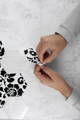
Don't want to spend money right away? Make yourown. A few printed black-and-white images placed inside a photo album, ring binder, or laminated booklet can work surprisingly well. In fact, newborns care far more about contrast than whether the book came from a store.
Stick to large patterns, simple shapes, and clear images. If your baby spends even 30 seconds looking at a page, you've already achieved the goal. Sometimes the simplest options end up getting the most use.
Best High-Contrast Baby Books for 3-6 Months (Color, Grasping, and Exploration Stage)
Now the real “play” starts, so your baby will benefit mostly from these toys.
7. Baby Faces by Margaret Miller
Babies love looking at faces, and that's exactly what makes this book such a good choice for the 3-6 month stage. Instead of illustrations, it uses real photos of babies making different expressions, which many little ones find fascinating.
The pages are simple, easy to focus on, and great for encouraging visual tracking and early social development. It's a lovely book to share together and one that many babies come back to again and again.
8. My Face Book (Star Bright Books)
If you've ever noticed your baby staring at people more than toys, there's a reason for that. Babies are naturally drawn to faces.
This book is filled with real photos of babies making different expressions. It's simple, but that's what makes it work. Many babies will spend longer looking at these pages than at cartoons or illustrations.
9. Pat the Bunny by Dorothy Kunhardt
Around this age, babies stop being happy with just looking. They want to touch everything.
Pat the Bunny gives them exactly that. There are different textures to feel, pages to explore, and simple activities that make reading more interactive. It's one of those sensory books for newborns that parents often remember from their own childhood.
10. Montessori Genius Giraffe Book
This is a good next-step book once your baby starts showing interest in more than black-and-white pictures. The Montessori Genius Giraffe Book is filled with pages that introduce animals, objects, and simple images using bright, easy-to-see designs.
The sturdy format stands up well to grabbing, bending, and all the other things babies do to books.
11. Montessori Baby Soft Barn
Most babies don't read books at this age. They wrestle them. The Montessori Baby Soft Barn is made from soft fabric, so babies can squeeze it, chew it, throw it, and explore it safely.
The farm theme adds new pictures and textures while still keeping things simple enough for young babies to enjoy.
12. High-Contrast Cloth Book with Crinkle Paper
There's something about crinkly paper that babies just can't resist. A good high-contrast cloth book combines bold pictures with fun sounds and textures. Your baby gets visual stimulation, sensory play, and early book exposure all in one toy.
It's also one of the easiest books to toss into a diaper bag and bring anywhere.
How to “Read” to a Newborn
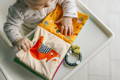
To read to a newborn, hold the book about 8-12 inches from their face, keep reading sessions short, and focus on talking together rather than finishing the story.
Your baby doesn't care if you skip pages, forget words, or spend two minutes talking about a picture of a ladybug. Right now, they're mostly looking, listening, and enjoying being close to you.
Hold the book about 8-12 inches from your baby's face - that's where they can see best. Point at the pictures, talk about what you see, and use a calm, natural voice. You don't need to perform. Your baby already thinks you're interesting.
Keep reading sessions short, around 5-10 minutes. If your baby starts looking away, gets fussy, or suddenly seems fascinated by the ceiling instead, they're probably done for now.
The best time to read is when your baby is awake, fed, and reasonably happy. Not during a hunger meltdown. Not during the pre-nap protest.
Even a few minutes of reading each day can support early language development. In other words, those little reading moments count more than you think.
FAQs
When can babies see color?
Babies start noticing some colors, especially red, within the first couple of months. By around 5 months, most babies can see a much wider range of colors.
Do high-contrast books really help vision?
They help support visual development by giving babies something they can actually see. High-contrast images encourage focusing, tracking, and visual exploration during the months when eyesight is developing rapidly.
How often should I read to a newborn?
A few minutes every day is enough. Consistency matters more than length. Even a 5-minute reading session can be valuable.
Can newborns be overstimulated by high-contrast books?
Yes. If your baby starts looking away, becomes fussy, or seems tired, it's time for a break. Short sessions work best.
What is the first book I should buy?
A simple black-and-white book with large, clear images is usually the best place to start. The Montessori Newborn Contrast Book was designed specifically for this stage of development.
Final Thoughts: What’s The Best Toy for Your Baby’s Vision?
The first few months go by fast. One day, you're holding a sleepy newborn, and before you know it, they're reaching for books on their own.
High-contrast books won't make your baby a genius. What they do offer is something much more important: age-appropriate visual stimulation, shared moments together, and an easy way to make reading part of everyday life from the very beginning.
If you're looking for a first book, the Montessori Newborn Contrast Book is a simple place to start. Sometimes the smallest habits - a few minutes of reading each day - end up paying off for years to come.

Free Delivery
Over $80

Easy Returns
No questions asked

Unbeatable Warranty
1-year ++ warranty
 Secure CheckoutWorld’s most secure payment method