


Teaching Toddlers About Farm Life Through Hands-On, Sensory-Rich Activities
Teaching toddlers about farm life works well because farms are full of things young children can see, name, move, and understand. There are animals, barns, gardens, food, vehicles, and plenty of daily jobs. It is basically a toddler’s dream world, only with more chickens.
Through farm activities for toddlers, children can practise animal recognition, sounds, vocabulary, matching, sorting, pretend play, fine motor skills, and early responsibility. They learn that cows need food, crops need care, and every runaway sheep eventually has to go back in the box.
The Montessori approach makes this learning active. Instead of watching a singing tractor on a screen or pressing a button that moos for them, children move pieces, feed animals, open doors, match shapes, and create stories.
This type of hands-on learning for toddlers connects words with actions. A child does not simply hear “Put the horse in the barn.” They find the horse, move it, place it inside, and probably decide that the chicken lives there too.
What Makes a Farm Toy Montessori-Inspired?
A Montessori-inspired farm toy gives the child something meaningful to do. It may invite them to sort animals, match pieces, open and close doors, build scenes, care for pretend crops, or return everything to its proper place.
Useful Montessori farm toys often:
- Use familiar, real-world themes
- Encourage independent play
- Support matching, sorting, placing, and carrying
- Invite open-ended stories
- Require fine motor control
- Allow activities to be repeated
- Avoid screens and passive entertainment
- Remain simple enough for sustained concentration
A toy does not need to be made from wood, painted beige, or photographed beside a tasteful houseplant to have educational value. Likewise, not all wooden farm toys are automatically Montessori-inspired.
What matters is whether the child can participate, make choices, solve small problems, and use the material independently. A good farm toy should help the child participate in the farm world, not just look at it.
5 Montessori Farm Toys and What They Teach
These are the best five Montessori farm toys that support different kinds of activities.
Montessori Farm Life: Best for Open-Ended Farm Storytelling
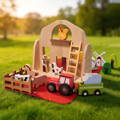
The Montessori Farm Life set is designed for children aged three and older. It includes 14 interactive pieces stored inside a portable box and is made from eco-friendly wood with non-toxic paint.
This is one of the most flexible farm toys for toddlers who enjoy moving characters around and deciding what happens next. Children can place animals near the barn, take them into the field, pretend to feed them, or create an unexpected chicken emergency. Farm pretend play rarely follows a sensible schedule.
As children build scenes, they practise farm vocabulary, animal recognition, sequencing, imagination, problem-solving, patience, and fine motor control. Because there is no single correct story, they can rearrange the pieces and begin again as often as they like.
Try an activity called “A Day on the Farm.” Set out the pieces and say, “Good morning, farm animals. Who wakes up first?”
You can then ask:
- “Where does the cow go?”
- “Who lives near the barn?”
- “What happens first in the morning?”
- “Which animal needs food?”
Montessori Traveling Farm: Best for Portable Play and Cleanup Skills
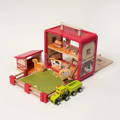
The Montessori Traveling Farm combines a transformable felt farmstead bag with 16 wooden figurines. It is suitable for children aged two and older and turns farm play into a portable, screen-free activity.
Children can arrange the figures, match animals to different areas, create stories, and pack everything into the bag when playtime ends. This supports spatial awareness, imagination, hand-eye coordination, sorting, and fine motor skills.
The built-in storage is especially useful for teaching responsibility. Cleanup is not treated as the unfortunate event that ruins all the fun. It becomes the final part of the farm routine.
Try “Pack the Farm.” When play is finished, say, “Every animal has a place. Can you help them go home?”
Helpful prompts include:
- “Which animals are going inside?”
- “Can you find the horse?”
- “Where should the farmer stand?”
- “Can you pack the farm for our trip?”
Montessori Farm Busy Book: Best for Quiet Focus and Fine Motor Practice
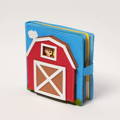
The Montessori Farm Busy Book is a soft, travel-friendly farm busy book for children aged three and older. It has 10 activity pages made from felt with strong bindings.
Each page gives the child something to touch, move, attach, or solve. Activities explore caring for animals, growing crops, and completing simple farm-themed games. The interactive 3D design supports attention, sequencing, problem-solving, storytelling, and fine motor development.
This is a practical choice for quiet time, bedtime, restaurants, journeys, and waiting rooms. It keeps small hands occupied without lights, sound effects, or a tractor repeatedly announcing the alphabet.
Try “Farm Helper Book Time.” Rather than reading each page for the child, say, “Let’s see what needs to happen on the farm today.”
Ask:
- “Who needs help on this page?”
- “What grows on the farm?”
- “What should we do first?”
- “Can you show me how to care for the animals?”
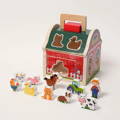
Montessori Wooden Farmhouse: Best for Sorting, Problem-Solving, and Language
The Montessori Wooden Farmhouse includes a wooden farmhouse and 10 figurines. It is intended for children aged three and older.
This set suits children who enjoy fitting, placing, opening, closing, and putting objects inside other objects. In other words, most toddlers who have ever discovered a kitchen cupboard.
Children can compare the shapes and sizes of the pieces, test where they fit, match animals to spaces, and return everything to the farmhouse after play. These actions strengthen fine motor control, spatial awareness, matching, problem-solving, farm vocabulary, and early size recognition.
Try an activity called “Who Fits Where?” Offer one figure at a time and allow the child to explore the farmhouse.
Ask:
- “Does this one fit here?”
- “Which piece is too big?”
- “Where can the sheep go?”
- “Can all the animals go back inside the farmhouse?”
Montessori Learning Felt Board: Best for Farm Play in Small Spaces
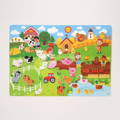
The Montessori Learning Felt Board in Farm Life creates a large play area without covering the floor. It features a felt board, hooks, Velcro pieces, animals, and shapes and is suitable for children aged three and older.
Children can attach animals, move shapes, organise the scene, and create new stories directly on the wall. This supports visual organisation, animal vocabulary, spatial awareness, hand-eye coordination, matching, placing, and fine motor control.
The wall-mounted design makes the board particularly useful in smaller bedrooms or play areas. Because the farm remains visible, children can return to it throughout the day. One minute the chicken is beside the barn; five minutes later, it is on the roof. No explanation will be provided.
Try “Build Your Farm Wall.” Say, “Let’s build the farm. Where should the animals go?”
You might ask:
- “Which animal lives here?”
- “Can you move the chicken near the barn?”
- “What shape would you like to add?”
- “What is happening on your farm today?”
The board provides an open-ended canvas rather than one finished picture. Children can repeat familiar scenes, change their arrangements, and tell a different story each time.
The sturdy, soft felt should be spot-cleaned only and kept away from liquids. Save wet or messy farm sensory play for a separate tray.
How Farm Play Supports Toddler Development
Farm play supports several areas of development at the same time, but it does so through simple actions rather than formal lessons.
Language and Vocabulary
Children hear and use words for animals, objects, places, and actions. They may name a cow, goat, sheep, chicken, barn, farmhouse, or field. They also practise useful verbs such as feed, carry, wash, grow, open, close, and sleep.
Fine Motor Skills
Attaching Velcro pieces, turning felt pages, fitting figurines into openings, packing animals, and moving small objects all require controlled hand and finger movements.
Matching and Sorting
Toddler farm animal activities naturally invite children to compare animals and objects. They can match an animal to its home, group big and small figures, find pieces of the same colour, or decide which objects belong inside and outside.
Storytelling and Sequencing
A simple farm routine has a clear order. The animals wake up, eat, go outside, return to the barn, and settle down at night. Recreating these events helps children explore beginning, middle, and end.
Care and Responsibility
Farm animal toys for toddlers introduce simple care routines. Animals need food, crops need attention, and tools go back after use. The child is not caring for a real goat, thankfully, but the idea of responsibility begins to make sense.
Simple Farm Activities Parents Can Add at Home
You do not need to build a barn in the living room to extend farm learning. These five simple activities work with wooden figures, felt pieces, pictures, or other farm materials you already have.
Farm Animal Sound Matching
Make an animal sound and invite your child to find the matching figure or picture. Swap roles if they want to make the sounds. Prepare for an extremely confident but biologically questionable goat impression.
Feed the Animals
Use felt shapes, wooden pieces, or pretend food. Let the child decide what each animal eats and place the food nearby. You can introduce words such as hungry, full, more, less, give, and share.
Farm Cleanup Routine
At the end of play, ask every animal to “go home.” This gives cleanup a clear purpose while supporting order and responsibility.
Match Each Animal to Its Home
Match the chicken to the coop, horse to the stable, or cow to the barn if your materials allow it. Start with two choices and add more when the activity becomes easy.
Create a Farm Story Sequence
Ask your child to show what happens in the morning, at lunchtime, and at night. Let them move the figures and tell the story in their own way.
For a messier activity away from the felt board, this farm-themed sensory bin guide provides more ideas for farm sensory play.
Try not to over-teach these activities. Observe, narrate what your child is doing, and ask gentle questions. If the horse sleeps in the chicken coop, the farm will survive.
Which Farm Toy Is Best for Your Child?
Each toy supports a slightly different kind of play.
Product
Best For
Age
Key Skills
Farm Life
Storytelling
3+
Imagination, fine motor skills
Traveling Farm
Travel and cleanup
2+
2+
Sorting, responsibility
Farm Busy Book
Quiet play
3+
Focus, sequencing
Wooden Farmhouse
Sorting and fitting
3+
Size recognition, language
Learning Felt Board
Small spaces
3+
Storytelling, spatial awareness
Product
Best For
Age
Key Skills
Farm Life
Storytelling
3+
Imagination, fine motor skills
Traveling Farm
Travel and cleanup
2+
2+
Sorting, responsibility
Farm Busy Book
Quiet play
3+
Focus, sequencing
Wooden Farmhouse
Sorting and fitting
3+
Size recognition, language
Learning Felt Board
Small spaces
3+
Storytelling, spatial awareness
So, to help you get the right pick…
Choose Montessori Farm Life if your child enjoys creating scenes and inventing stories.
Choose the Montessori Traveling Farm if you want easy storage and a toy that can come along on trips.
Choose the Montessori Farm Busy Book if you need a contained activity for quiet time, bedtime, restaurants, or waiting rooms.
Choose the Montessori Wooden Farmhouse if your child loves fitting pieces, filling containers, and testing where objects belong.
Choose the Learning Felt Board if you want a larger play surface without losing half the floor.
Parents can also browse the Farm Friday collection to compare additional farm-themed materials.
Safety and Age Notes
Always follow the age guidance provided with each product. Farm-themed sets may contain loose pieces that are unsuitable for children who still place objects in their mouths.
Supervise toddlers during play and check the materials regularly for wear or damage. When the activity is finished, collect every figure and store the pieces safely.
For younger toddlers, choose larger, simpler pieces and supervise closely. For children under three, avoid small loose parts unless the product is specifically designed and labelled as age-appropriate.
The Montessori Learning Felt Board should be spot-cleaned only and kept away from liquids. Use a separate washable tray or container for wet farm sensory play.
Growing Big Ideas From Small Farm Stories
Farm play is about much more than learning which animal says “moo.” It gives toddlers a concrete way to explore sounds, movement, care routines, matching, sorting, storytelling, and responsibility.
The best Montessori farm activities invite children to participate. They can move the cow, feed the horse, grow pretend crops, clean up the barn, and tell everyone exactly why the chicken is driving the tractor.
When children can move the animals, build the farm, care for the pieces, and tell the story in their own way, farm life becomes something they understand with their hands, not just something they memorise.
Frequently Asked Questions
How Do Toddlers Learn About Farm Life?
Toddlers learn through hands-on play, animal sounds, stories, matching, sorting, and repeated exposure to farm vocabulary. Moving an animal into a barn helps connect the words “cow” and “barn” with a clear action and place.
Are Farm Toys Montessori-Inspired?
Farm toys can be Montessori-inspired when they are hands-on, simple, open-ended, and connected to real-world routines. Useful activities include caring for animals, sorting figures, matching objects, and returning materials to their place.
What Age Are Montessori Farm Toys Best For?
Many Montessori farm toys are suitable for children aged two to five, depending on their design and the size of the pieces. Always check the individual age recommendation and supervise younger children.
What Skills Do Farm Toys Teach Toddlers?
Farm toys can support vocabulary, animal recognition, fine motor skills, matching, sorting, spatial awareness, storytelling, sequencing, problem-solving, and early responsibility.
Which Farm Toy Is Best for Travel?
The Montessori Traveling Farm and Montessori Farm Busy Book are practical options for journeys, restaurants, waiting rooms, and other situations where children need portable, screen-free play.

Free Delivery
Over $80

Easy Returns
No questions asked

Unbeatable Warranty
1-year ++ warranty
 Secure CheckoutWorld’s most secure payment method