


Summer Themed Sensory Play for Indoors: 10 Montessori-Inspired Activities
Backyard water tables, beach trips, and happy children playing in the sunshine - that’s summer, right? Well, yes, but when real life shows up, it's 98°F outside, the playground feels like a frying pan, and your toddler is melting down because their banana broke in half.
What can we do about this? Go indoors.
So, indoor summer sensory play can be really, really fun. Picture water, ice, bright colors, interesting textures, fruity smells, and hands-on play. This is all without anyone getting sunburned before lunch.
And forget the idea that you need a sensory bin with 27 carefully arranged accessories, no. Some of the best summer sensory play ideas are almost laughably simple. Give a child a bowl of water and a sponge, and they'll suddenly become the busiest person in the house.
One important reminder: always supervise sensory play, especially when using water, food, ice, or small objects. Young children should never be left alone around water, even for a moment. The American Academy of Pediatrics (AAP) recommends constant supervision around water, even for very small amounts.
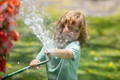
What Makes Sensory Play Montessori-Inspired?
Montessori-inspired sensory play is simple, hands-on, child-led, and built around real-life experiences.
Sensory play helps children learn about the world through touch, sight, sound, smell, taste, and movement. It looks like fun because it is fun. But it's also how children build fine motor skills, concentration, confidence, and problem-solving skills.
Dr. Maria Montessori believed children learn best by doing. That's why Montessori activities are super simple. Give a child a sponge, a bowl of water, and two cups, and they'll often stay busy longer than they would with a plastic toy that sings.
A Montessori-inspired sensory setup gives children a simple invitation, a few real tools, and enough freedom to explore safely. Children learn by scooping, pouring, squeezing, sorting, washing, transferring, and observing. What looks like "pouring water back and forth for the 47th time" to us feels like serious business to them.
Along the way, they naturally discover ideas like rough and smooth, heavy and light, floating and sinking, full and empty, wet and dry. No flashcards. No worksheets. Just hands-on learning that actually feels like play.
Now, our guide to Sensory Play at Home includes additional activities using everyday household materials.
How to Set Up Indoor Sensory Play Without Making a Huge Mess
Let's be honest. Most parents aren't worried about the activity. They're worried about the cleanup.
But indoor summer sensory play can stay surprisingly contained with a little preparation.
Of course, some days are perfect for outdoor play too. In that case, our guide to Outdoor Activities Without Toys will come in handy.
Choose a Contained Space
Pick an area that's easy to clean. Good options include:
- Large tray
- Shallow plastic bin
- Baking tray
- Towel on the floor
- Waterproof mat
- Low table
- Kitchen floor
- Empty bathtub
You don't need a fancy setup. You just need a clear play zone.
Keep Materials Simple
More materials usually create more mess.
Stick to 3-5 items at a time. A bowl, sponge, spoon, cup, and some water can keep a child busy for quite a while. Fewer items also help children focus.
Set Up a Cleanup Station
Before you start, keep a few supplies nearby:
- Towel for spills
- Small bowl for used items
- Dustpan or handheld vacuum for rice or dry materials
- Cloth for wiping surfaces
- Basket for tools
Future-you will be thankful.
Let Children Help Clean Up
In Montessori, cleanup is part of the activity.
Children can wipe the tray, squeeze the sponge, return spoons to a basket, or pour leftover water into a bowl. It builds independence and helps create good habits.
Match the Activity to Your Child
Not every activity works for every age.
Children under 3 should not use small loose parts that could become choking hazards. The U.S. Consumer Product Safety Commission (CPSC) identifies small parts as a serious choking risk for young children. Keep materials large, simple, and always supervise sensory play.

10 Montessori-Inspired Indoor Summer Sensory Activities
We created a list of 10 Montessori-inspired activities for summer, but indoors. Yes, indoors. Watch out for the 8th one, it’s wet but in a good way.
Activity 1: Sunshine Water Transfer Tray
Materials:
- Shallow tray or basin
- Yellow sponge
- 2 small cups
- Spoon or small ladle
- Towel underneath
Add a small amount of water to one cup and leave the second cup empty. Then invite your child to move the water from one container to the other using a spoon, cup, or sponge.
This is one of those activities that looks almost too simple. Then your child spends the next 20 minutes happily transferring water back and forth while you wonder why you bought so many toys.
The Montessori value comes from the repetition. Children build hand strength, coordination, concentration, and practical life skills every time they pour, scoop, or squeeze.
For a simple summer touch, use yellow cups or a yellow sponge and call it a "Sunshine Water Tray."
Safety note: Use only a small amount of water and supervise closely throughout the activity. If your child enjoys water-based activities, you'll find more ideas in our Splashing and Learning guide.
Activity 2: Ice Cube Rescue with Warm Water Droppers
Materials:
- Ice cubes
- Tray
- Small bowl of warm water
- Dropper, spoon, or spray bottle
- Large shells, toy animals, or other large objects
Freeze a few large objects in ice cubes or place the ice cubes on a tray. Then hand your child a bowl of warm water and a dropper, spoon, or spray bottle.
Instantly, they're no longer sitting at the kitchen table. They're on an important rescue mission.
The goal is simple: free the trapped treasures. Children love watching the ice slowly disappear, especially when they're the ones making it happen. Don't be surprised if they start giving dramatic updates about the condition of the stranded turtle or shell.
While they're busy saving the day, they're also building fine motor skills, patience, concentration, and learning about cause and effect. They get to see, feel, and test what happens when warm water meets cold ice.
For a summer twist, call it "Beach Treasure Rescue" or "Melting Summer Ice."
Safety note: Use large objects only. Ice cubes can be a choking hazard for younger children, so supervise closely and adjust the activity for your child's age.
Activity 3: Citrus Smell and Squeeze Station
Materials:
- Lemon or orange wedges
- Small bowl
- Spoon
- Cup
- Sponge or cloth
- Optional child-safe citrus press for older preschoolers
Place a few lemon or orange wedges in a bowl and invite your child to smell, squeeze, stir, and wipe the tray afterward. Some children will carefully squeeze every drop. Others will spend five minutes sniffing oranges.
This activity supports smell, touch, hand strength, practical life skills, vocabulary, and sequencing. Children explore the peel, the juice, the texture, and the smell while using real tools and real movements.
Safety note: Do not use citrus if your child has sensitive skin, eczema flare-ups, or known reactions. Avoid contact with eyes. This is sensory play, not a requirement to taste.

Activity 4: Summer Washing Station
Materials:
- Small basin
- Water
- Soft brush
- Sponge
- Towel
- Washable toys, large shells, or smooth stones
If there's one activity that perfectly combines sensory play and Montessori practical life, it's washing things. Place a few washable items in a basin and invite your child to wash, scrub, rinse, and dry them. That's the whole setup. Simple, but surprisingly engaging.
By doing this, kids practice, hand strength, sequencing, coordination, independence, and responsibility. Children follow a clear process: wash, rinse, dry, and put away.
For a summer theme, keep it natural. Try saying, "These shells are sandy. Let's wash and dry them."
Safety note: Use large objects only. Avoid small shells, stones, or other items that could be a choking hazard for children who still mouth objects.
Activity 5: Indoor Beach Rice Tray
Materials:
- Plain uncooked rice
- Tray or bin
- Cups
- Spoon
- Funnel
- Silicone cupcake cups
- Optional large shells or wooden rings
No beach? No problem. Add a thin layer of rice to a tray and offer the Montessori Silicone Beach Set for scooping, pouring, filling, and transferring. That's all you need. Resist the urge to build an entire tropical paradise. The rice will do most of the work.
This activity supports bilateral coordination, pouring, scooping, wrist control, concentration, and early math language. Along the way, you can model words like more, less, full, empty, heavy, light, pour, and spill.
For a summer twist, call it an Indoor Beach Tray. No fake palm trees required.
Safety note: Rice is not safe for children who still put small items in their mouths. Use only with close supervision and age-appropriate children. For more rice-based sensory ideas, our Rice and Water Sensory Bin guide offers additional setups and age adaptations.

Activity 6: Cool Cloth Calm-Down Basket
Materials:
- Soft washcloths
- Bowl of cool water
- Small basket
- Towel
- Optional lavender sachet nearby (not in the water and not for mouthing)
Place a few washcloths in a basket and invite your child to dip one into cool water, squeeze it out, and wipe their hands, arms, feet, or even a table. Don't be surprised if they spend the next ten minutes washing perfectly clean things. That's part of the fun.
Now, this is the fun part that your kid doesn’t see. With this activity, children build hand strength, body awareness, independence, and self-regulation while doing something that feels useful and refreshing.
For a summer twist, call it a Cool-Down Basket. It's a simple activity for hot afternoons when everyone needs a little reset.
Safety note: Avoid essential oils on your child's skin. Plain water is the safest option, especially for babies and toddlers.
Activity 7: Fruit Sorting and Texture Tray
Materials:
- Whole fruits with different textures, such as lemon, orange, peach, plum, or banana
- Tray
- Small cloth
- Optional bowl
Place 3-4 whole fruits on a tray and invite your child to touch, smell, sort, and compare them. Which one feels smooth? Which one is bumpy? Which one smells the strongest? Which one feels heavy? Soft?
Children naturally start noticing details that adults miss. Suddenly, a peach and a lemon become very different objects.
This activity supports tactile discrimination, smell, language, comparison, sorting, and observation. It also encourages children to slow down and really explore what is right in front of them.
For a summer theme, use seasonal fruits whenever possible. No special materials required. Your grocery bag is doing most of the work here.
Safety note: Whole fruits work best for sensory exploration. If using cut fruit, make sure it matches your child's eating stage and supervise closely.
Activity 8: Spray Bottle Window "Rain"
Materials:
- Clean spray bottle filled with water
- Window, glass door, tile wall, or tray
- Cloth or small squeegee
- Towel
Give a toddler a spray bottle, and suddenly they have an important job to do.
Fill a spray bottle with water and let your child spray a window, glass door, tile wall, or tray. Then hand them a cloth or small squeegee and invite them to wipe it clean.
This activity is simple, but it works a lot of skills at once. Children strengthen their hands, practice coordination, and learn to control their movements. They also get the satisfaction of seeing a real result from their work.
For a summer theme, call it Window Rain or Summer Rain. A few sprays of water can feel surprisingly exciting on a hot day.
Safety note: Use a new spray bottle or one that has only ever contained water. Never reuse a bottle that previously held cleaning products.

Activity 9: Shell and Spoon Sound Tray
Materials:
- Large shells
- Wooden blocks
- Metal spoon
- Plastic cup
- Small towel
- Tray
Some children love making noise. This activity lets them do it in a way that won't make you regret the decision five minutes later.
Place a few large objects on a towel-lined tray and invite your child to gently tap them with a spoon. What sounds different? What sounds the same? Which object is louder? Which one is quieter?
Most children naturally start experimenting. They tap a shell. Then a block. Then the cup. Then the shell again, just to make sure it still sounds like a shell.
For a summer touch, use large beach items like shells, but don't overthink it. The sounds are the interesting part.
Safety note: Avoid sharp or broken shells and any small objects. Gentle tapping is the goal here, not a drum solo.
Activity 10: Summer Pour-and-Float Bowl
Materials:
- Large bowl or basin
- Water
- Cup
- Sponge
- Cork, large leaf, or large floating toy
- Towel
Some things float. Some things sink. Toddlers find this far more exciting than adults do.
Fill a bowl with a small amount of water and add a few large objects. Then let your child explore. They can drop objects into the water, pour water with a cup, squeeze a sponge, and watch what happens.
Try asking simple questions like: Does it float? Does it sink? What happens when it gets wet? Is it heavy or light?
This activity supports observation, vocabulary, concentration, and early scientific thinking. It also gives children another chance to practice pouring and controlling water.
For a summer feel, use natural materials like a large leaf, cork, or smooth piece of bark.
Safety note: Use large objects only and supervise around water at all times.
How to Adapt These Activities by Age
To adapt these activities that we listed at the top, the easiest approach is to match them to your child's age, skills, and supervision needs.
Babies (6-12 Months)
At this stage, focus on observation and safe touch.
Good options include:
- Cool cloth basket
- Water tray with caregiver support
- Whole fruit texture tray
- Watching floating objects
Avoid rice, beans, shells, beads, and other small items that could become choking hazards.
Toddlers (1-2 Years)
Toddlers love repetition. Give them simple tools and plenty of time to practice.
Good options include:
- Sponge squeezing
- Cup pouring
- Summer washing station
- Spray bottle with help
- Large fruit sorting
Toddlers (2–3 Years)
Children at this age often enjoy practical life activities and more controlled movements.
Good options include:
- Washing station
- Rice tray (if there is no mouthing risk)
- Spray and wipe
- Ice melting with a spoon
- Citrus squeezing with help
Preschoolers (3-5 Years)
Preschoolers are ready for more problem-solving and responsibility.
Good options include:
- Sink-or-float play
- Ice rescue
- Fruit sorting
- Indoor beach rice tray
- Sound tray
- Child-led cleanup
Remember, these age ranges are only guidelines. Some children still mouth objects at age 3, while others stop much earlier. Always adapt activities based on your child's development, motor skills, and need for supervision.
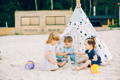
How to Keep Indoor Summer Sensory Play Calm
To keep indoor sensory play calm and collected, follow these tips:
- Start with one tray.
- Use fewer items than you think you need.
- Show one action, then step back.
- Avoid correcting constantly.
- Use a towel or mat to define the play area.
- End before your child is overtired.
- Make cleanup part of the activity.
In Montessori, the goal is meaningful repetition.
If your child wants to pour water between the same two cups for fifteen minutes, that's not a problem. That's the activity working.
Safety Notes for Indoor Sensory Play
Most sensory activities are simple and safe, but a few basic precautions are worth keeping in mind.
- Always supervise sensory play, especially when using water, food, ice, or small objects.
- Avoid small loose parts for children under 3.
- Skip water beads for young children.
- Avoid sharp shells, glass, and breakable objects.
- Do not use essential oils on young children's skin.
- Use clean water and clean tools for every activity.
- Throw away food-based materials if they become wet and cannot be safely dried.
- Watch for allergies or skin reactions to citrus, flour, food dyes, or scented materials.
When in doubt, simpler is usually safer. A bowl of water, a sponge, a cloth, and a few household items can provide plenty of sensory learning without adding unnecessary risks.

Bringing Summer Sensory Play Indoors
Summer sensory play can be surprisingly simple. A bowl of water, a sponge, a piece of fruit, or a handful of ice cubes can keep a child engaged far longer than most adults expect.
These activities give children a chance to explore summer through touch, smell, sound, movement, and temperature while practicing real-life skills along the way. Pouring, washing, squeezing, sorting, and cleaning up may look simple, but that's exactly why they work.
You don't need a complicated setup or a collection of sensory toys. A few everyday materials and a little space to explore are often enough.
The best sensory activities are usually the ones children come back to again and again. The ones they can explore, repeat, clean up, and make their own with growing independence.
Frequently Asked Questions
What is summer sensory play?
Summer sensory play is any activity that helps children explore summer through touch, smell, sound, movement, water, temperature, and everyday materials.
How can I do summer sensory play indoors?
Set up a simple activity on a tray or towel using items like water, ice, fruit, cups, sponges, or rice. You do not need a sensory bin or special toys.
What are the best Montessori-inspired sensory activities for summer?
Some of the best options are water pouring, sponge squeezing, washing stations, fruit sorting, ice rescue activities, spray-and-wipe work, and sink-or-float bowls.
Is sensory play safe for toddlers?
Yes, when it is supervised and matched to the child's age. Avoid choking hazards, supervise all water activities, and use large, simple materials whenever possible.
What can I use instead of buying sensory toys?
Use what you already have at home. Cups, bowls, spoons, washcloths, sponges, spray bottles, fruit, ice cubes, containers, and trays work just as well as many sensory toys.

Free Delivery
Over $80

Easy Returns
No questions asked

Unbeatable Warranty
1-year ++ warranty
 Secure CheckoutWorld’s most secure payment method