


Stages of Standing and Walking: How to Support Your Baby the Montessori Way
Most parents wait for that big moment, those first wobbly steps. So naturally, the question comes up: when do babies walk? But walking isn’t something that suddenly appears. It’s the result of everything your baby has been doing for months.
Rolling builds strength. Sitting teaches balance. Crawling develops coordination and confidence. All of that leads to the baby's standing development and, eventually, walking.
So if it feels like nothing is happening yet, it probably is, just not in obvious ways. Your baby is practicing through movement, trial, and repetition.
From a Montessori point of view, walking isn’t something you teach. It’s something your baby reaches on their own, step by step, literally.

When Do Babies Start Standing and Walking?
Most take their first steps between 12 and 15 months, but the full journey starts much earlier.
Babies begin pulling up to stand around 7 to 10 months. Then comes the baby cruising stage (9 to 13 months), where they move sideways along furniture, building confidence and coordination.
Those first independent steps can look a bit wobbly, and that’s completely normal. From there, it can take until 18 to 24 months for truly confident walking to develop.
The most important thing to understand is that this timeline varies a lot. Some babies move faster, others take their time.
There’s no prize for walking early. What matters is steady progress through each stage, without pressure or rushing.
Why Walking Develops in Stages
Walking might look simple, just stand up and go, right? If only. In reality, it’s one of the most complex things your baby will learn.
To walk, your baby needs strength (especially in the legs and core), balance, coordination, and a surprising amount of confidence. And none of that shows up overnight.
This is where the stages of walking baby development come in. Each phase builds something important. Crawling strengthens the body and teaches coordination. Pulling up works the legs and grip. The baby cruising stage helps with balance and side-to-side movement.
It’s basically a full training program, just without the gym membership.
The key idea here is simple: movement builds movement. Every wiggle, crawl, and wobble is practice.
If you want to support this naturally, simple daily movement matters more than anything; these 6–12 month activities are a great place to start.

The Stages of Standing and Walking
The stages of walking baby development don’t happen randomly. Each one builds on the last, like a natural progression, and your baby moves through at their own pace. Your role? Set things up well, and then mostly stay out of the way.
Stage 1: Pulling Up (7–10 months)
What it looks like:
Your baby grabs onto furniture, your legs, or anything within reach and pulls themselves up to stand, usually from a kneeling position.
What’s developing:
This stage builds serious leg strength, along with grip and early coordination. It’s the first time your baby starts working against gravity in a big way.
How to support:
Give your baby stable surfaces to pull up on, low sofas, sturdy tables, or a fixed bar. Let them try again and again (they will). Avoid placing your baby into a standing position. It might feel helpful, but it skips the learning part.
Stage 2: Standing with Support (9–13 months)
What it looks like:
Your baby can stand while holding onto something. You’ll notice a lot of bouncing, shifting weight, and testing balance.
What’s developing:
This stage is all about weight-bearing and building awareness of balance. Your baby is figuring out how their body works while upright.
How to support:
Let them stand as much as they want. Don’t rush in to “fix” their balance. Create opportunities to stand and explore safely along furniture.
Stage 3: Cruising (9–13 months)
What it looks like:
Welcome to the baby cruising stage, your baby moves sideways while holding onto furniture like a tiny professional.
What’s developing:
Now we’re seeing coordination, lateral movement, and early balance come together. This stage connects standing to actual walking.
How to support:
Place furniture close enough so your baby can move between pieces. Think of it as creating a “path.” Encourage movement without guiding every step.
Stage 4: Standing Independently (10–16 months)
What it looks like:
Your baby lets go… for a second. Then maybe two. Then panic-sits. Totally normal.
What’s developing:
This is where balance control and core stability really come online. It’s a big confidence leap, too.
How to support:
Let your baby practice without stepping in too quickly. Avoid the urge to celebrate too loudly mid-stand; it often causes an immediate sit-down (yes, really).
Stage 5: First Steps and Early Walking (12–15+ months)
What it looks like:
Those first steps are wide, wobbly, and slightly chaotic. Arms up, feet far apart, it’s all part of the process.
What’s developing:
Now your baby is building coordination and, just as important, confidence. Walking is as much mental as it is physical.
How to support:
Let them walk. Fall. Try again. Repeat. Avoid holding their hands constantly; it actually changes their posture and balance.
You can also check guidance from the World Health Organization on motor development for more information.

The Montessori Way to Support Standing and Walking
Instead of teaching or pushing milestones, Montessori focuses on creating the right conditions and then trusting the process.
Freedom of Movement
This is the foundation. Babies need time on the floor to move, explore, and figure things out.
That means limiting time in containers like walkers, jumpers, or seats. They might seem helpful, but they restrict natural movement. Floor time is where real baby standing development happens, through trial, error, and a lot of wobbly attempts.
Prepared Environment
Think simple and safe. Low furniture that your baby can pull up on. Open space to move around. Surfaces that don’t slip or tip over.
You’re not entertaining your baby, you’re setting up a space where movement can happen naturally. A well-prepared environment does most of the work for you.
Minimal Intervention
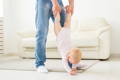
This is the hard part. Don’t place your baby into standing. Don’t rush steps. Don’t “practice walking” by holding their hands all day.
It feels like helping, but it often interrupts the learning process. Babies learn best when they get into positions on their own.
Repetition and Independence
Babies repeat movements endlessly, and for good reason. That’s how they learn.
Pull up, sit down. Stand, fall. Try again. It might look repetitive, but it’s actually precision training. Montessori trusts this process. And honestly? It works better than any shortcut.

Practical Montessori Setup at Home
To help your baby take on those first steps, start with the space, not the baby. You don’t need anything fancy, just make your home suitable for movement. Follow these Montessori home steps:
Barefoot Movement
If you’re looking for a simple way to support walking, this is it: let your baby go barefoot.
Shoes might look cute, but they actually get in the way at this stage. Bare feet give your baby direct contact with the ground, which improves balance and helps them understand how their body moves.
There’s also a lot of sensory feedback happening. Your baby can feel textures, pressure, and shifts in weight, all of which help fine-tune movement.
And don’t forget foot strength. Those tiny muscles need to work, and shoes can limit that.
At home, barefoot is best. If you need something for warmth, go with soft, non-slip socks.
Simple, natural, and exactly what your baby needs.

What May Be Less Helpful
Sometimes, supporting walking means giving your baby more time and space to move freely, rather than adding extra equipment. Many parents use walkers or jumpers with the best intentions, but some movement specialists prefer limiting them because they do not allow babies to practise movement in the same way they do on the floor.
Avoid Walkers and Jumpers
Walkers and jumpers can look fun and convenient, especially when a baby seems eager to stand or move. However, they place babies in upright positions before they have reached those positions independently.
Because the device supports much of the baby’s weight, the baby may not get the same opportunity to develop balance, weight shifting, coordination, and postural control through natural movement.
This does not mean that using a walker or jumper occasionally will automatically cause harm. It simply means they are not necessary for learning to walk, and floor-based movement usually gives babies a more natural way to build the strength and confidence they need.
A gentler approach is to offer plenty of safe floor time, let your baby move at their own pace, and allow standing and cruising to develop naturally when they are ready.
Avoid Over-Helping
Constantly holding your baby’s hands or “walking” them around feels helpful, but it changes how they use their body.
They lean on you instead of finding their own balance. Over time, that can delay confidence and independent movement.
Avoid Rushing
Trying to speed things up, standing them early, pushing for steps, usually backfires.
Your baby needs time to build strength and coordination properly. Skipping stages doesn’t make them walk sooner. It just makes the process harder.
Let development happen. It works better that way.
Signs Your Baby Is Ready for Walking
You don’t need to guess, your baby will show you when they’re getting close. One big sign is cruising confidently. If your baby is moving along furniture without much hesitation, they’re building the coordination needed for independent steps.
You’ll also notice brief standing without support. It might only last a second or two at first, but that’s a big deal. It means balance is starting to click.
Then come the early attempts. A step here, a wobble there, maybe a quick drop to the floor. These attempted steps are testing your baby's confidence as much as movement.
It’s not about perfection, it’s about trying.
When you see these signs coming together, walking usually isn’t far off.
When to Talk to a Pediatrician
Most babies take their time with walking, so a bit of variation is totally normal. But there are a couple of points where it makes sense to check in, just for peace of mind.
If your baby isn’t pulling up to stand by around 12 months, or not trying any steps by about 18 months, it’s worth having a quick chat with your pediatrician.
That doesn’t mean something is wrong. Some babies just move more slowly, or focus on other skills first.
Think of it as a simple check-in, not a red flag. It’s always better to ask and get reassurance than to sit and wonder.
What This Really Comes Down To
Walking is a process your baby builds step by step. All the rolling, crawling, pulling up, and cruising lead to that point. Nothing is wasted. It’s all part of the journey.
It’s easy to focus on the first steps, but the real goal is independence. A baby who learns to move on their own terms builds better balance, coordination, and confidence.
So instead of trying to speed things up, trust what’s already happening. Give your baby space, time, and the right environment, and let them figure it out.
Because in the end, your role isn’t to teach your baby to walk, it’s to give them the space to get there.

Free Delivery
Over $80

Easy Returns
No questions asked

Unbeatable Warranty
1-year ++ warranty
 Secure CheckoutWorld’s most secure payment method