Bible Story Toys for Little Hands: Gentle, Screen-Free Ways to Share Faith
Bible story toys give young children a hands-on way to explore the stories and values your family loves. They can move the characters, arrange a scene, and tell you what happens next, sometimes with a plot twist nobody saw coming.

For parents and grandparents hoping to share their Christian faith, that is a lovely place to start. Yeah, a toddler can’t sit through a lesson, but helping the animals onto a boat? Now you have their attention.

Reading together still matters. Adding something a child can hold gives them another way into the story, especially when listening turns into pointing, moving, and joining in.
The best faith-based toys for kids leave room for those small discoveries. They invite conversation about kindness, care, and hope while giving busy fingers something purposeful to do.

This fits so nicely into Montessori at home. Make an activity accessible, offer a little guidance, and give your child time to explore.

Follow us now as we’ll explain what hands-on faith play offers, how to keep it gentle, and which of two Bible toys might suit your family. 
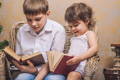
Two children sitting together in a wicker chair, looking at open books in their laps.

How Young Children Really Take In a Story

Young children explore stories through a mixture of listening, looking, moving, and repetition. Giving them figures to handle makes room for active participation alongside reading.

A child hears that the animals entered the Ark, then spends some time lining them up. Moving those pieces gives them something concrete to connect with the words.

Repetition helps, too. In a study of three-year-olds, children who heard the same storybooks repeatedly learned and retained new words better than children who heard different stories containing those words. That finding concerns shared reading, but it gives parents a reassuring reason to welcome familiar favorites. 

Yes, even the favorite you could now narrate while asleep.

With hands-on Bible stories, familiar scenes also become opportunities to participate. Way better than screen time and how children react to it. So, at first, your child may simply copy you. Later, they might choose the characters, describe an action, or take over the narration.

Our guide to Montessori toys and storytelling explores more ways to make that participation part of play.

What Bible Story Play Builds Beyond Faith

Bible story play gives children opportunities to practice language, small-hand movements, and shared storytelling while exploring your family’s beliefs.

The American Academy of Pediatrics’ Healthy Children explains that imaginative play supports language and social interaction, including hearing new vocabulary, communicating ideas, and trying different perspectives. These are benefits of play generally, rather than proven outcomes of these specific Bible toys. 

Here is what those opportunities can look like at home:
  • Early literacy and storytelling: Describing who arrives first and what happens next gives children practice organizing a story. Before they can read independently, they can still become enthusiastic narrators.

  • Fine motor practice: Picking up figures, positioning animals, and pressing felt pieces into place involve controlled finger and hand movements. Our fine motor skills guide explains this everyday practice.

  • Time to concentrate: An unhurried setup lets a child stay with an activity that interests them. Some will carefully arrange everything; others will prefer a short visit.

  • Conversations about care: Looking after story characters gives you a concrete starting point for talking about kindness. “Let’s make room for everyone” is something a young child can act on.

  • Connection: Taking turns telling the story creates space to listen to each other. Grandparents can join in without needing to become the entertainment department.

  • Personal expression: Your child’s arrangement shows what caught their attention, even when their version includes an unexpected animal picnic.

Need more ideas? Just check out our guide to emotional intelligence and Montessori toys. This one shows how to bring feelings into play. 
A child playing with wooden loose parts on the table.

Why Choose Screen-Free, Tactile Bible Toys?

Screen-free, tactile Bible toys let children control the movement and pace of a story themselves.

A felt character waits wherever your child places it. A wooden animal can board, disembark, and board again. There is time to pause, ask something, or rearrange the entire scene.

Sound books can be enjoyable too, especially when an adult joins in. The main distinction is how much opportunity a toy gives your child to contribute.

So, when choosing Montessori Bible toys, consider this:
  • Can your child move and arrange the pieces?
  • Is there room to make choices?
  • Can you talk together without competing with recorded narration?
  • Does the activity suit your child’s current interests?
You can find a good starting point in our guide on what are Montessori toys for this kind of stuff.

What to Look for in a Bible Story Toy

Choose a Bible story toy with an appropriate age rating, manageable pieces, clear material information, and room for repeated play.

Use this checklist when comparing Bible toys for toddlers:
  • Check the age label: Follow the manufacturer’s guidance and consider your child’s handling and mouthing habits.

  • Inspect the construction: Look for securely attached components, smooth wooden surfaces, and pieces in good condition.

  • Read the materials: Felt is not automatically natural, and a wooden toy may include plastic components.

  • Look for participation: Characters to position and scenes to arrange offer more storytelling possibilities than decoration alone.

  • Consider the routine: A compact activity may suit visits and travel; a larger playset needs somewhere to spread out.

  • Leave room to grow: Early play might involve matching or moving. Later, your child may narrate a complete scene.
Supervise play and check small-part suitability, including loose Velcro components and wooden pieces. Supervision does not make an unsuitable toy appropriate for a younger child.

For Christian toys for preschoolers, accessible pieces and opportunities to tell their own version are particularly useful.

The Best Hands-On Bible Story Toys to Gift

Our two picks suit different interests: a felt storyboard for exploring multiple Bible stories and a wooden Ark for returning to one familiar story.

Both invite children to participate. The better fit depends on their age, the space available, and whether they enjoy arranging pictures or moving three-dimensional figures.

Montessori Bible Storyboard for Story Variety
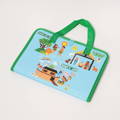
The Montessori Bible Storyboard is a lovely fit for children aged three and older who enjoy joining in with different Bible stories.

You tell the story, and they decide where everyone goes. This Bible felt board comes with six sheets of figures and images, plus 102 Velcro pieces, so little hands have plenty to arrange. You can start with a few characters and see what happens. Someone can end up in the wrong scene; that’s okay too. You can gently bring them back, or enjoy the unexpected guest appearance.
Montessori Bible Storyboard
It is small enough to bring along to Grandma’s or tuck into a travel bag, and it works nicely for a little play before bed. Verified buyer Sarah K. says her daughter began requesting it instead of their usual bedtime books. Moving the characters had become part of the fun.

There is no need to introduce every piece at once. A familiar story, a few figures, and your company are a good beginning.

Specification

Details

Recommended age

3+

Contents

1 felt board, 6 figure/image sheets, 102 Velcro pieces

Material

Non-toxic felt, according to the manufacturer

Dimensions

11.8 x 8.7 x 1.0 inches

Weight

Approximately 12 oz

Care

Spot clean only; avoid contact with liquids

Montessori Wooden Noah’s Ark for One Familiar Story
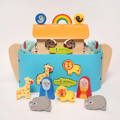
The Montessori Wooden Noah’s Ark suits children aged two and older who love getting their hands on the characters and playing a favorite story again. And again. You know the routine.

Read the illustrated book together, then let your child take charge of boarding. With wooden animal pairs and two figures to move around, there is plenty to keep small hands busy. Expect careful queues, last-minute rearrangements, and perhaps one passenger who apparently needs a better view.
Montessori Wooden Noah’s Ark
This Noah’s Ark toy also gives you easy openings to talk about care. “Let’s make room for this one” means something a young child can actually do. Follow their questions, keep the telling gentle, and leave time for them to work things out.

Verified buyer Margaret L. shares that her daughter started retelling the story with the animals after they read the book together. When play is finished, the removable cabin top makes packing away easier. Getting your child to declare the voyage over may take a little longer.

Specification

Details

Recommended age

2+

Contents

1 wooden Ark, 2 wooden figures, wooden animal pairs, 1 twenty-page illustrated storybook

Material

Eco-friendly wood and child-safe plastic, according to the manufacturer

Dimensions

13.4 x 5.7 x 7.9 inches

Weight

Approximately 46 oz

Care

Wipe clean with a dry cloth

Which Bible Story Toy Should You Choose?

Choose the Storyboard for variety and portability, or the Ark for exploring one story with a larger playset.

Your Priority

Better Fit

Main Reason

Several stories

Bible Storyboard

Flexible scenes

Compact packing

Bible Storyboard

Smaller, lighter format

One familiar narrative

Wooden Noah’s Ark

Book and figures together

Three-dimensional play

Wooden Noah’s Ark

Pieces to move and arrange

Your child’s habits can help settle the choice. A child who enjoys arranging pictures may gravitate toward felt. One who spends ages moving figures around a play space may prefer the Ark.

For siblings, follow each product’s age guidance and keep older children’s pieces away from younger children when needed. Buying both makes sense when your family wants both approaches, but one well-used toy is plenty.

The most useful purchase is the one that fits your actual routine, including where you will store it afterward. The living-room floor already has a demanding workload.

A Gift That Plants Something Lasting

Bible story toys can make meaningful gifts for Easter, Christmas, baptisms, christenings, dedications, and birthdays when they fit the receiving family’s beliefs.

If you are choosing Christian gifts for toddlers, begin with the child’s current age rather than the occasion. A keepsake for a baby can be saved for later, with its age label clearly communicated.
For Easter gifts for toddlers, consider adding a short note about why the story matters to you. Grandparents might also include an invitation to read and play together.

The same thoughtfulness applies when selecting faith gifts for kids at Christmas or a dedication. A conversation with the parents helps you choose something they will welcome and use.

To be of help, check this guide on Montessori for grandparents; you can find more ideas for supporting purposeful play.

You do not need an overflowing gift basket. A suitable toy, a personal message, and time together can feel wonderfully complete.

How to Share Bible Stories Together

Share a short version of the story, demonstrate a few actions, and let your child take a turn.

You can keep it this simple:
  1. Choose a small starting point. Offer only the pieces needed for one scene.
  2. Tell it briefly. Use clear words and follow your child’s attention.
  3. Hand over the action. Let them move a character or decide where something belongs.
  4. Welcome repetition. A familiar scene can be enjoyable without adding something new every time.
  5. Invite conversation. Try “What happens next?” or “How could we help?”
  6. Finish when interest fades. Leave the activity available for another day.
For Noah’s Ark, you might emphasize caring for animals and hope, while answering questions about the storm honestly and gently. Avoid dwelling on frightening details.

Follow the principles in child-led learning in Montessori education: offer support, notice their interests, and allow pauses.

And know that if your child wants to arrange silently, that counts as participation too. Nobody needs to defend their interpretation at the dining table.

Stories Worth Passing Down

Sharing a beloved Bible story can begin with a few movable pieces and an adult willing to sit nearby.

Your child might press a felt figure into place, arrange some animals, or ask for the beginning again. Those moments give you opportunities to talk, listen, and explore the values your family holds close.

The Storyboard offers variety; the Ark offers a familiar story to revisit. Choose the approach that suits your child and keep expectations gentle.

You bring the story and your attention. They bring curiosity, busy hands, and possibly a few creative amendments.

Frequently Asked Questions

How Do I Introduce Bible Stories to a Toddler?

Tell a short, age-appropriate version and invite your toddler to move suitable figures as you speak. Revisit favorites, answer questions simply, and stop when their interest fades.

Why Choose Hands-On Bible Toys Instead of Sound Books?

Hands-on toys offer opportunities to arrange characters and contribute to the storytelling. Sound books can also support enjoyable shared reading; choose according to how your child engages.

What Age Are Bible Story Toys For?

Age suitability varies by product. Follow the specific label, inspect the pieces, and consider your child’s development and mouthing habits rather than relying on the theme alone.

What Do Children Learn From Bible Story Play Besides Faith?

They can practice describing actions, ordering events, handling small objects, and taking turns. Shared play also creates opportunities to discuss feelings and kindness.

Are Bible Toys Good Gifts for Easter, Christmas, or a Baptism?

Yes, when they suit the family’s beliefs and the child’s age. For a baby’s baptism, an older-rated toy can be given as a clearly labeled keepsake for later.

Which Is Better: a Felt Bible Board or a Noah’s Ark Set?

A felt board suits families wanting story variety and compact play. An Ark set suits children who enjoy revisiting one narrative through figures and a book.

  • Free Delivery

    Over $80
  • Easy Returns

    No questions asked
  • Unbeatable Warranty

    1-year ++ warranty

  • Secure Checkout
    World’s most secure payment method