


Balance Swing vs. Traditional Swing: Understanding Different Movement Experiences for Your Child
You’ve probably seen platform swings popping up in Montessori playgrounds and backyard setups… and thought, wait, isn’t that just a swing?
It’s a fair question. When it comes to balance swing vs traditional swing, they might look similar, but they feel very different once a child gets on them.
A traditional swing gives that classic back-and-forth “flying” feeling. A balance swing opens up more ways to move, spin, sway, lie down, and even share the space. Neither is better. They just offer different kinds of movement.
And that’s what matters.
Once you understand what each swing actually gives your child, it becomes much easier to choose what fits your space, your budget, and, most importantly, your child.

What Is a Balance Swing? (And How It Differs from Traditional Swings)
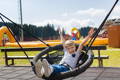
A balance swing, or the Montessori swing, is a flat or flexible platform that hangs from ropes or straps, instead of a fixed seat.
You’ll usually see a few types:
- Disc swings (smaller, one child)
- Nest swings (larger, fabric or rope circle)
- Platform swings (wooden or padded flat base)
These are often referred to as a platform swing for kids, especially in backyard setups.
Thing to notice: there’s no defined sitting position.
Instead of sitting in a molded seat, your child can:
- Sit cross-legged
- Stand and balance
- Lie on their stomach or back
- Shift positions as the swing moves
It’s much more open-ended. The child decides how to use it.
Because of this flexibility, balance swings are sometimes called “therapy swings”, as similar designs are used in occupational therapy settings. But at home, they’re simply another way for kids to move, explore, and play on their own terms.
What Is a Traditional Swing?
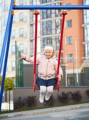
A traditional swing is the classic one most of us grew up with.
It usually comes in two forms:
- Bucket seat (for toddlers, with leg holes and support)
- Belt seat (for older kids, flexible but still structured)
The key difference is the defined sitting position. The child sits facing forward, holds the chains or ropes, and stays in that position the whole time.
The movement is simple and consistent: back and forth in a straight line.
What Children Experience on a Balance Swing
Multi-Directional Movement (Not Just Back-and-Forth)
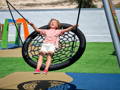
Unlike traditional swings, this one moves in all directions: sideways, circular, spinning, and even tilting.
That matters because your child’s vestibular system (balance and movement sense) gets a wider range of input. This type of movement helps children develop coordination and spatial awareness.
Depending on how it’s used, it can feel:
- Calming (slow swaying)
- Exciting (fast spinning)
This is one of the key disc swing benefits, especially for kids who enjoy more active movement.
Core Strength and Balance (Without Even Trying)
There’s no seat holding your child in place. That means they have to use their core to stay steady.
Every small movement equals tiny adjustments. And those add up.
In that light, the core strength is linked to:
- Better posture
- Coordination
- Overall body control
Flexible Body Positions (More Ways to Play)
This is where balance swings really open up.
Kids can:
- Sit
- Kneel
- Stand
- Lie on their stomach
- Lie on their back
They naturally experiment.
This builds body awareness (also called proprioception), basically, understanding where their body is and how it moves.
Social Play (Built-In)
Many balance swings can hold more than one child.
So instead of “my swing vs your swing,” you get:
- Kids sitting together
- Figuring out how to move at the same time
- Laughing when it doesn’t work (at first)
Self-Regulation Through Movement
One of the biggest differences: kids control the experience.
They can:
- Gently rock when they want to slow down
- Spin fast when they want more input
Movement like this is used in sensory play and therapy settings because it can help children reset and regulate.
At home, it just looks like:
A kid swinging… and staying there way longer than you expected.
What Children Experience on a Traditional Swing
Predictable Back-and-Forth Movement
Traditional swings move in one clear pattern: back and forth.
It’s simple. And that’s the point.
This kind of rhythmic movement is known to have a calming effect on many children. It’s predictable, steady, and easy for the brain to follow.
For some kids, this becomes their go-to: Same motion, same pace… instant reset.
Bilateral Coordination (Learning to Pump)
At first, kids get pushed, then one day, they figure it out.
Learning to pump their legs is actually a big deal. It means:
- Upper body holds steady
- Lower body moves in rhythm
- Everything works together
This is called bilateral coordination, and it’s a key motor skill children build over time.
Most kids start getting it around 5-7 years old.
Momentum and “Mini Physics Lessons”
Swings are basically a child’s first physics lab.
They quickly learn:
- Pump = go higher
- Stop = slow down
- Lean back = more speed
It’s simple cause-and-effect, but it builds real understanding of movement, force, and timing.
Individual Mastery (That “I Did It” Moment)
This is where traditional swings shine.
There’s a clear path:
2. Then: awkward attempts
3. Finally: smooth, independent swinging
And when it clicks? Big moment. It’s one of those small wins that feels huge to a child.
Social Play and Turn-Taking
Playground swings come with built-in social rules.
Kids learn to:
- Wait for their turn
- Ask for pushes
- Watch out for others
It’s simple, but it matters.
Unlike shared balance swings, this is more about taking turns than playing together, and both are useful in their own way.

Safety Considerations for Each Type
Balance Swing Safety
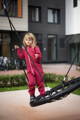
Balance swings are generally closer to the ground, so falls are shorter, but there are a few things to keep in mind:
- They move in all directions, so you’ll need space all around, not just front and back.
- Spinning can be fun, but some kids may feel dizzy if it goes too far.
- Always check the weight limit, especially if more kids jump on.
- There’s no seat holding them in place, so supervision matters more.
- Usually a better fit for kids with decent balance (around 3+).
Traditional Swing Safety
Traditional swings are simple, but they come with their own basics:
- The seat sits higher, so falls can be a bit longer.
- You mainly need clear space in front and behind.
- Kids swinging fast can bump into others walking by.
- Watch for pinched fingers on chains.
- Teach simple rules: sit properly, don’t jump off mid-swing.
- Use bucket seats for toddlers, belt swings for older kids.
Universal Safety Tips
No matter which swing you choose, a few things always apply:
- Make sure it’s securely installed and rated for your child’s weight
- Add a soft surface underneath (grass, mulch, or rubber)
- Supervise based on your child’s age and confidence level
Nothing complicated here, just a good setup and a bit of awareness goes a long way.
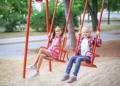
Age Appropriateness and Developmental Stages
Ages 1–2 (Young Toddlers)
- Balance swing: Can work with parent support (lying on stomach, gentle motion)
- Traditional swing: Bucket seat with back support and straps
Ages 3–4 (Preschoolers)
Now, kids start to explore more.
- Balance swing: Sit, move around, try spinning and swaying
- Traditional swing: Hold on well, start learning to pump (with help)
Ages 5–6 (Kindergarten)
This is where things really open up.
- Balance swing: More creative play (standing, spinning, playing with friends)
- Traditional swing: Learning to pump independently = big milestone
Sensory Processing Considerations
For Sensory-Seeking Children
Some kids just want more movement. Faster, wider, more variety.
For them, balance swings often feel more satisfying because they can:
- Spin
- Change direction
- Move their whole body
This kind of input is often used in sensory play and therapy settings because it gives stronger feedback to the body.
In simple terms:
More ways to move equal more ways to feel.
For Sensory-Sensitive Children
Other kids prefer things slow and predictable.
That’s where traditional swings often feel better:
- Same motion every time
- Easy to control speed
- No spinning or sudden changes
For these children, the steady back-and-forth can feel:
Safe, calming, and easy to handle.
When to Think About Sensory Needs
You don’t need a diagnosis to notice patterns.
Just watch your child:
- Avoids swings? They may want more control (balance swing can help)
- Seeks constant movement? They may enjoy more input (balance swing offers that)
- Gets overwhelmed easily? A traditional swing might feel more comfortable
If your child is already working with an occupational therapist, it’s always worth asking what kind of movement they benefit from most.

Practical Considerations: Space, Cost, and Setup
Space Requirements
Before choosing between a balance swing vs traditional swing, think about space first.
- Balance swing needs space all around (it can move 360°)
- Traditional swing needs space mostly front and back (fixed arc)
Both need a decent area, but balance swings usually take a bit more room.
Also, check height. No matter which you choose, you’ll need enough overhead clearance for safe movement.
Cost Comparison
Swings come in a wide range, depending on quality and size:
- Balance swings: around $50-$200+
- Traditional swings: around $30-$100+
Bucket seats (for toddlers) tend to cost more than simple belt swings.
Installation costs are usually similar since both need a sturdy frame or a strong anchor point.
One thing that matters more than price: weight rating and build quality.
Installation Options
Both swing types are pretty flexible when it comes to setup:
- Swing sets (easiest option, supports both types)
- Tree branches (must be strong and stable)
- Porch or deck beams (only if structurally sound)
- Indoor setups (balance swings are often used in sensory spaces)
If you're building a play area, this is also a good place to think about outdoor play equipment that supports overall movement.
Weather and Durability
Not all swings handle weather the same way.
- Fabric balance swings (like nest swings) may need to be brought inside
- Plastic or rubber traditional swings are usually more weather-resistant
- Wooden platforms look great, but may need extra care
Also think long-term: Which one will your child still use in a year?
Some kids stick with traditional swings for years. Others move toward more open-ended play, like balance swings.
Can You Have Both? (And Should You?)
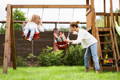
Many families end up having both, since each swing offers a different kind of play. One might be perfect for calm, controlled movement, while the other is all about rhythm and skill.
That said, it comes down to your space, budget, and whether both will actually get used. A simple approach is to start with one and add the second later if it makes sense.
If you’re unsure, just watch your child at the playground. They’ll show you what they enjoy most.
Making Your Decision: Questions to Ask
If you’re still deciding between a balance swing vs traditional swing, don’t overthink it. Just run through a few simple questions:
- What’s my child’s age and stage right now?
- Do they seem to seek movement or prefer things more calm and predictable?
- How much space do I realistically have?
- What’s my budget for this setup?
- What kind of movement does my child enjoy most right now?
- What do they naturally go for at the playground?
- Am I buying for one child or multiple kids over time?
If you're wondering should I buy a platform swing, these questions will help you decide.
Choosing the Right Swing for Your Child
There’s no wrong choice here. Both swings offer real value. A balance swing brings variety, freedom of movement, and full-body engagement. A traditional swing offers rhythm, skill-building, and that classic back-and-forth feel. What matters most is choosing what fits your child’s needs right now, not what looks best online.
You can always start with one and add the other later if it makes sense.
At the end of the day, kids don’t need the “perfect” setup. They need movement, fresh air, and space to play. Watch what your child enjoys, follow their lead, and adjust as you go. That’s more than enough.

Free Delivery
Over $80

Easy Returns
No questions asked

Unbeatable Warranty
1-year ++ warranty
 Secure CheckoutWorld’s most secure payment method