


Learning Tower vs. Step Stool: Which Kitchen Helper Is Right for Your Toddler?
If you have a toddler, you’ve seen this scene. You’re cooking. They’re tugging at your leg. Arms up. Big feelings.
"Help me."
They don’t actually want to cook. They want to be there. To see what you’re doing. To feel included. That urge to copy adults is a big part of early independence, and a core idea behind Montessori at home.
But then your brain kicks in. The counter is high. The stove is hot. Knives exist. Suddenly, this sweet moment turns into a safety math problem you didn’t plan for.
That’s where a kitchen helper comes in. Most parents end up choosing between two common options: a more enclosed setup that keeps a toddler contained, or a simple step-up solution that’s quick and flexible. Both get kids to counter height. Both can support independence. And both still require your full attention.
So this isn’t a debate about right or wrong. It’s a look at the learning tower vs step stool, how each one works, how safe they really are, and which kind of family life they fit best.
Because real kitchens aren’t perfect. Toddlers aren’t predictable. And the best choice is the one that works safely in your home, with your child, on an average Tuesday night.
Learning Tower vs Step Stool: What Each One Is Really Designed For
Before getting into safety, space, and daily use, let’s take a quick look at what each option actually is.
What Is a Learning Tower (Kitchen Helper)?
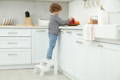
A learning tower, often called a Montessori kitchen helper, is an enclosed standing platform that lifts toddlers to counter height while helping keep them in one place. Instead of standing on something, your child stands inside the structure, surrounded by safety rails on all sides.
Most learning towers have an adjustable standing platform. This allows the tower to grow with your child, often from around 18 months through early childhood. They’re also built to be heavy and stable.
The main purpose of a learning tower is to let kids hang out at counter height without turning every moment into a balancing act. Toddlers can stand comfortably while washing vegetables, stirring, pouring, or just supervising your cooking like a tiny manager. And because the structure helps keep them in one spot, parents usually feel more comfortable using both hands.

- Requires dedicated floor space and isn’t easy to move.
- Designed as a long-term piece used for several years.
- Encourages independent climbing in and out.
What Is a Step Stool for Toddlers?
- Hand washing and teeth brushing at the bathroom sink.
- Brief counter tasks or quick “helping” moments.
- Reaching shelves, switches, or dressers.
- Potty training (getting on and off the toilet).

Learning Tower vs. Step Stool: Side-by-Side Comparison
Safety Considerations at Counter Height
When we talk about toddler kitchen safety, this is the section that matters most. A learning tower vs step stool choice changes the type of risk, not the need for supervision.
With a learning tower, the enclosed platform and four-sided rails help reduce sudden slips or missteps. It’s heavy and stable, so tipping isn’t much of a concern. That containment gives many parents more confidence during longer tasks.
The trade-off?
Kids can still reach countertop items, and some toddlers can climb out if they’re determined. Its weight also means you can’t quickly slide it away from a hot pan or sharp tool.
A step stool for toddlers is the opposite. It’s easy to move, easy to grab your child from, and easy to remove from a risky situation. But the open design means a child can step off without warning, lean too far forward, or tip the stool, especially during energetic moments.
Critical reminder: Neither option makes the kitchen “safe.” The American Academy of Pediatrics clearly states that young children should never be left unattended in the kitchen. No product replaces active, close supervision, ever.
Independence and Skill Building (Montessori Perspective)

Practical Daily Use in Real Homes
Space and Storage Realities
Feature
Learning Tower
Step Stool
Footprint
Requires dedicated floor space (about 1.5’ x 2’)
Very compact when in use
Placement
Permanent or semi-permanent kitchen fixture
Can move from room to room
Storage
Some models fold, but are still bulky
Stores under sink, in closet, or behind a door
Daily Impact
Becomes part of the kitchen layout
Easy to clear for cleaning or guests
Age Range and Long-Term Use

Budget and Value Considerations
Where Learning Towers and Step Stools Are Similar
- Support practical life skill development.
- Build balance, coordination, and body awareness.
- Encourage participation in daily routines.
- Foster connection during everyday moments.
Choosing What Fits Your Family
Consider a Learning Tower If…
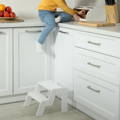
Consider a Step Stool If…
Why Not Both? A Complementary Approach
Real Family Scenarios
Safety Reminders and Best Practices for Toddlers at Counter Height
No matter which option you use, the rules stay the same: counter height always means supervision. There are no shortcuts here, just smart habits.
Before your child steps up, clear the counter. Knives, hot pans, cleaning products, and heavy appliances should be out of reach. Think from your toddler’s new height, not yours. If they can reach the stove, add knob covers. If something could tip or fall, move it back.
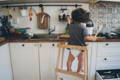
Teach safe climbing up and down during calm moments, not when dinner is burning. Go slow. Show them how. Set simple rules like “ask first” before climbing.
Most importantly, never leave a child unattended at counter height. Both the American Academy of Pediatrics and Safe Kids Worldwide stress that active supervision is essential in kitchens.
Final Thoughts: Trusting What Works for Your Family

Free Delivery
Over $80

Easy Returns
No questions asked

Unbeatable Warranty
1-year ++ warranty
 Secure CheckoutWorld’s most secure payment method