Montessori Balance Toys: A Guide to Physical and Cognitive Benefits

When you see a child teetering on a wobble board or gliding down a balance bike path, it might just look like play. But underneath the surface, their brain and body are doing serious work.


Montessori balance toys are open-ended tools designed to help children explore coordination, movement, and control. They’re not flashy or complicated. In fact, many are simple wooden pieces, but the benefits run deep. 


These toys support physical strength, cognitive development, emotional growth, and most importantly, confidence.


In this guide, we’ll explore how Montessori-inspired balance toys strengthen gross and fine motor skills, boost focus, and support creative, whole-body learning. We’ll also share DIY ideas for families who want to build these skills at home, no gear required.

Baby putting a decoration on a birthday cake.

Gross Motor Skills: Building Strength, Balance, and Coordination

Big movements matter. When children climb, wobble, scoot, and stretch, they’re not just burning energy; they’re wiring their brains for balance, control, and confidence. Montessori balance toys are designed to support this natural development through purposeful, full-body play.

Balance Bike

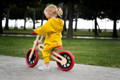
A balance bike helps young children build leg strength, posture, and coordination, all without the pressure of pedals. They learn how to steer, shift weight, and stay upright at their own pace.


It’s a gentle, confidence-building first step before transitioning to a pedal bike. Many kids skip training wheels entirely thanks to balance bikes like this Montessori baby balance bike, which are scaled perfectly for toddlers.
Baby putting a decoration on a birthday cake.

Balance Beams

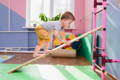
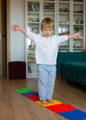
Yeah, it doesn’t matter if they’re walking heel-to-toe across a wooden beam or tiptoeing along a tape line; kids build core strength, body awareness, and stability. This kind of focused movement teaches one-foot balance and helps children understand where their bodies are in space.
Baby putting a decoration on a birthday cake.

Balance Swings

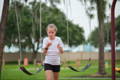
Balance swings activate the vestibular system, which is the part of the brain responsible for balance and motion. 

They gently challenge posture, timing, and orientation while providing a soothing, rhythmic motion many kids love. The Montessori Balance Buddy is a great example of a toy that blends motion with muscle control.

Baby putting a decoration on a birthday cake.

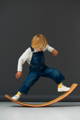
Wobble Balance Board

With every rock, twist, and shift, children strengthen their legs and core. Wobble boards are perfect for small spaces and can be used standing, sitting, or even lying down. They're a go-to for active indoor play that still supports control and concentration.

Wooden Stepping Stones

These are great for agility, balance, and spatial planning. Children can set up their own obstacle courses, jump from one to the next, or invent imaginative paths. It’s all about learning how to move with intention and adjust with every step.

Fine Motor Skills: Strengthening Small Muscles and Control

Balance isn’t just about running, jumping, and climbing; it also shows up in the small stuff. Montessori toys that challenge grip, placement, and hand control help build the fine motor skills kids need for everyday tasks like dressing, writing, and eating independently.

Balance Scale

A child placing small items onto a balance scale is doing more than just exploring weight; they’re learning careful hand control, patience, and early math concepts. It encourages thoughtful placement and builds strength in the fingers and wrists.
Baby putting a decoration on a birthday cake.

Balance Blocks

Stacking blocks may look simple, but it takes real precision. Children need to grip, align, and release with control. Montessori stacking stones offer a beautiful challenge with irregular shapes that make balance more complex and rewarding.
Baby putting a decoration on a birthday cake.

Rainbow Tree / Marble Tree

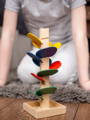
This colorful toy lets children drop marbles from the top and listen as they trickle down. It’s soothing, satisfying, and sneakily developmental. The act of placing each marble encourages pincer grip, hand-eye coordination, and wrist rotation.

You can check out the Montessori rainbow tree for a version that blends sensory play with motor control.
Baby putting a decoration on a birthday cake.

Car Ramp Racer

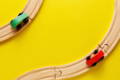
Children love watching cars race from level to level, but this toy does more than entertain. It builds bilateral coordination, strengthens hand positioning, and supports cause-and-effect learning as kids watch motion unfold based on their input.
Baby putting a decoration on a birthday cake.

Additional Developmental Benefits

Montessori balance toys do more than support motor skills. They engage the whole child. As kids stretch, build, and balance, they’re also growing in focus, resilience, and imagination.

Hand-Eye Coordination

Nearly every balance toy requires syncing what the eyes see with what the hands or body do. Whether a child is guiding a marble down a track or stepping across wooden stones, they’re building the visual-motor connection that supports everything from writing to sports.

Problem-Solving and Critical Thinking

Balancing blocks that keep tipping over? A wobble board that’s tricky to control? These moments are opportunities. Children learn to experiment, adapt, and try again, all the while building real problem-solving skills without adult instruction.

Creativity and Imaginative Play

Open-ended toys can become anything. A balance beam transforms into a pirate ship plank. Stepping stones turn into lava rocks. The structure fades, and storytelling takes over. This blend of movement and imagination helps children express themselves in new ways.

Emotional Regulation and Confidence

Trying something physically challenging and succeeding builds pride. Even small wins boost confidence. Balance toys also offer safe risk-taking, which helps children manage frustration, bounce back from setbacks, and regulate their emotions.

Focus and Concentration

Balancing requires presence. Children must slow down, pay attention, and engage fully with what they’re doing. This kind of quiet, intentional play strengthens attention span and supports calm, centered behavior.
Baby putting a decoration on a birthday cake.

No Toys? No Problem: DIY Balance Activities at Home

You don’t need to buy a shelf full of balance toys to help your child grow. Many of the same skills can be built with everyday objects and a little creativity. 

These simple, home-based activities offer fun ways to boost strength, coordination, and confidence. No special gear required.

DIY Balance Beam

Use a strip of masking tape on the floor or a wooden plank (supervised, of course). Have your child walk heel-to-toe, sideways, or even backwards. Add challenges like carrying a toy or balancing a beanbag on their head.

Pillow Stepping Stones

Scatter couch cushions, folded towels, or yoga blocks across the floor. Ask your child to hop, tiptoe, or crawl across without “falling into the lava.” It’s a great indoor activity for rainy days and helps with spatial awareness and agility.
Baby putting a decoration on a birthday cake.

Spoon and Ball Game

Balance a small ball, pom-pom, or plastic egg on a spoon and walk across the room. This challenges fine motor control, wrist stability, and focus. All in one silly, high-stakes game.

Nature Walk Challenges

Turn a simple walk into a balance adventure. Have your child walk along curbs, hop over cracks, climb over rocks, or balance on fallen logs. Nature is one of the best, most versatile balance playgrounds there is.

Conclusion

Balance-based play does more than tire kids out. It helps them grow into confident, coordinated, and capable little humans. In that light, Montessori balance toys are powerful because they invite movement and learning through joy, not pressure. They meet kids where they are and challenge them just enough to stretch their skills without frustration.

The best part? You don’t have to do it all. Start with one or two toys (or try a few DIY activities) and see what your child naturally gravitates toward. Real growth doesn’t come from forcing skills. It comes from letting children explore, move, and figure things out on their own.
  • Free Delivery

    Over $80
  • Easy Returns

    No questions asked
  • Unbeatable Warranty

    1-year ++ warranty

  • Secure Checkout
    World’s most secure payment method