


Montessori vs. Reggio Emilia: Key Differences in Early Education
Stuck choosing between Montessori and Reggio Emilia?
You’re not alone. Many parents find themselves in this exact spot while searching for the perfect preschool or early learning experience.
On the surface, they appear quite similar: both focus on the child, both value hands-on learning, and both aim to help kids grow into confident, independent individuals. But peek under the hood, and you'll notice some key differences in how they actually work.
That’s where this guide comes in. We’ll walk you through what sets them apart, where they came from, what the classrooms feel like, how the teachers roll, and how your child might thrive in each setup.
There’s no “one-size-fits-all” winner here. It’s all about what clicks with your kid and your crew.

The Stories Behind Montessori and Reggio Emilia - and Why They Matter
Yes, Montessori and Reggio Emilia both begin with a deep respect for children, but their histories are quite different.
They reveal a great deal about how each one perceives learning in action. Once you get where these methods come from (and the big ideas behind them), it all starts to make sense why they feel so different in real life.
The Montessori Method
Montessori was created way back in 1907 when Dr. Maria Montessori, an Italian physician and educator, opened her first school in Rome. She based her method on careful observation and a deep respect for the way children naturally learn.
At its core, the Montessori method is about independence, order, and giving children the tools to guide their own learning. Kids work at their own pace with hands-on materials designed to build focus, coordination, and confidence.
The environment is structured but not rigid, which lets kiddos explore freely while also having clear boundaries.
The Reggio Emilia Approach
Reggio Emilia started in northern Italy after World War II. A teacher named Loris Malaguzzi teamed up with local parents. They wanted a new kind of school, one that treated kids as smart, capable, and full of ideas.
This method is big on creativity, teamwork, and talking things through. Kids aren’t just sitting and listening; they help shape what they learn. There’s no set curriculum. Lessons grow from the kids’ own questions and interests.
Learning here is a team effort. Teachers, kids, and families all learn together.

Role of the Child and Teacher
Maria Montessori and Reggio Emilia both believe children are capable and curious. However, they approach the adult-child relationship in different ways. One leans into quiet observation and self-direction, while the other thrives on collaboration and dialogue.
Montessori
In a Montessori classroom, the child is the leader. They choose their own work from a prepared environment filled with purposeful materials. The teacher's role is more like a quiet guide. They’re there to observe and offer support when needed, and step back to let the child take the lead.
This setup fosters independence and concentration. Children learn to trust themselves, follow their interests, and solve problems independently without constant adult direction.
Reggio Emilia
Reggio sees learning as a shared process. The child isn’t just a participant. They’re a co-creator of knowledge. Teachers work alongside children, asking questions, exploring ideas, and helping extend their thinking.
Here, the teacher is a collaborator and researcher. Their role is to support inquiry, document learning, and help make children’s thinking visible.

Classroom Environment and Structure
Walk into a Montessori or Reggio Emilia classroom, and you’ll instantly feel the difference. Both are thoughtfully designed, but the way space is utilized and the amount of structure incorporated reflect each method’s unique philosophy.
Montessori: A Place Where Learning through Play Happens
Montessori classrooms are calm, ordered, and purposeful. Everything has a place, and materials are arranged neatly on low, accessible shelves.
The space is designed to promote independence. Here, children can choose their activities, work alone or in small groups, and return materials when they’re done.
The layout supports focus and self-direction, with minimal distractions. Mixed-age groupings (usually spanning three years) allow younger children to learn from older peers, and older ones to take on leadership roles.
Reggio Emilia: A Place Where Teamwork is the Real Dream Work
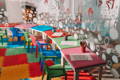
Reggio classrooms feel more fluid and creative. They evolve based on the interests of the children. The environment is treated as a “third teacher”. It’s a living space that reflects, supports, and responds to the learning happening within it.
You’ll often find natural light, open-ended materials, and beautiful displays of student work. Classrooms might come with studios or ateliers, inviting children to express ideas through art, movement, and construction.
Reggio also usually groups children by age, and spaces are designed to encourage interaction and exploration.
Learning Materials and Activities in both Classrooms
Both Montessori and Reggio Emilia believe children learn best by doing. But what they “do” and how they engage with materials look very different in each approach.
Montessori Classroom
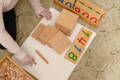
Montessori classrooms are filled with specific, hands-on materials that are carefully designed to teach one concept at a time. They’re usually self-correcting, meaning children can spot and fix their own mistakes without adult intervention.
It could be like sandpaper letters for tactile literacy, bead chains for counting and math, and practical life tools for developing motor skills and independence.
The work is purposeful and often quiet, with children repeating tasks to build mastery and concentration. Materials are introduced in a sequence, and children move through activities at their own pace.
You can find a great example in Montessori rainbow beads, which support early math skills through hands-on repetition and pattern recognition.
Reggio Emilia Classroom
Reggio materials are like little invitations to explore, with no strict rules, no right answers. Instead of boring worksheets, kids might get clay, shiny rocks, random bits and bobs, or even a light table with colorful shapes. The goal? Spark their imagination, get them building, and tell some cool stories along the way.
Projects don’t just pop up and end; they grow and change based on what kids are curious about. Art, science, and teamwork all mix together. And forget about using stuff the “right” way. What really counts is the fun thinking and chatting that happens while they play
Collaboration and Social Learning
Social learning is a big part of both Montessori and Reggio Emilia, but the way children work together (or independently) reflects the deeper priorities of each approach.
Montessori
In a Montessori setting, children mostly work independently. The focus is on self-paced learning, personal responsibility, and internal motivation. While group work is allowed (and sometimes encouraged), it’s not the primary mode of learning.
Collaboration can happen naturally, especially in mixed-age classrooms where older children model skills for younger ones. But the emphasis is always on individual growth and focus.
Reggio Emilia

Curriculum and Documentation
Montessori
Reggio Emilia
Documentation is also a huge part of the Reggio approach. Teachers capture photos, transcribe conversations, and display children’s work to make their thinking visible. These records aren’t just for parents; they also guide the learning process and help children reflect on their own ideas.

Creativity and Self-Expression
Both Montessori and Reggio Emilia encourage creativity, but they approach it in very different ways. One integrates it quietly through structure, while the other places it front and center.
Montessori
Creativity in Montessori often manifests in purposeful, skill-based work. Activities such as painting, sewing, and building are all Montessori activities, but what distinguishes them as Montessori is that children typically engage in them independently, with a focus on technique.
Artistic expression is valued, but it’s usually presented as a separate part of the curriculum rather than something woven into every subject. Children are free to create, but within clear limits and materials designed to support focus and precision.
Reggio Emilia
Parental and Community Involvement
Montessori
Parental involvement is encouraged through occasional classroom participation, workshops, or parent education nights. The connection is strong, but structured.
Reggio Emilia
Pros and Cons of Both Teaching Styles
No approach is perfect for every child. Montessori and Reggio Emilia both offer rich, meaningful learning, but each comes with strengths and challenges worth considering.
Montessori
Pros:
- Fosters deep independence and focus
- Clear structure and sequence support steady academic progress
- Materials are thoughtfully designed to build skills and self-correction
Cons:
- The structure can feel rigid to families who value more open-ended exploration
- Requires specially trained teachers and specific materials
- Less emphasis on group collaboration or imaginative play
Reggio Emilia
- Strong focus on creativity, social connection, and emotional intelligence
- Curriculum adapts to children’s interests, making learning highly engaging
- Collaboration between teachers, children, and families builds a sense of community
- Lacks a consistent framework, which can feel unclear or unstructured to some families
- Demands a high level of teacher responsiveness and parent involvement
- Less emphasis on formal academic milestones or long-term progress tracking

Blended Approaches in Practice
In real life, the lines between Montessori and Reggio Emilia aren’t always so clear. A lot of modern early education programs pull elements from both to create a more flexible, well-rounded experience for children.
Some schools use Montessori materials and classroom structure while incorporating Reggio-inspired projects that emerge from children’s interests. Others build a strong foundation in independence and self-regulation (à la Montessori) and then layer on expressive arts and collaborative inquiry from the Reggio model.
The beauty of today’s early education landscape is that it doesn’t have to be either-or. Parents and educators often blend the two, intentionally or intuitively, to meet the unique needs of their students.

How Montessori and Reggio Emilia Toys Differ (and How to Blend Them at Home)
Montessori toys are designed to teach specific skills through repetition and precision. Reggio materials are more open-ended, meant to inspire creativity and storytelling.
The good news? You don’t have to choose one or the other.
Montessori Toys – Structured and Self-Corrective
- Pink tower: Teaches size gradation, sequencing, and visual discrimination
- Sandpaper letters: Supports tactile letter recognition and early literacy
- Bead chains: Introduces counting, skip counting, and math patterns
- Practical life tools: Items like child-sized brooms or pouring sets build fine motor skills and independence
- Knobbed cylinders: Strengthen problem-solving and fine motor control
Reggio Emilia Materials – Open-Ended and Creative
- Loose parts: Stones, shells, buttons, or sticks for building, categorizing, or storytelling
- Clay and modeling dough: Invite sensory play and shape expression
- Light tables with translucent shapes: Encourage discovery of color, light, and form
- Natural objects: Leaves, flowers, or bark that connect kids to nature
- Recycled materials: Inspire sustainability and creative construction
How to Combine Montessori and Reggio Toys at Home
- Set up zones: Keep one shelf for structured Montessori work and another for Reggio-inspired open play. Let your child move freely between them based on their mood or interest.
- Combine materials: Use Montessori tools in creative projects. For example, after tracing sandpaper letters, your child can make a story collage with loose parts to "write" their own version.
- Alternate focus: Use Montessori toys during quiet, focused times and introduce Reggio materials for group play or when your child craves creativity and movement.
Finding the Right Path for Your Child

Free Delivery
Over $80

Easy Returns
No questions asked

Unbeatable Warranty
1-year ++ warranty
 Secure CheckoutWorld’s most secure payment method