
Teaching Toddlers to Use a Spoon the Montessori Way
Let’s be honest: teaching your toddler to use a spoon can feel like a battle between chaos and progress. There’s oatmeal on the floor, yogurt in the hair, and a spoon somewhere under the table, but underneath all that mess is something amazing: independence.
Dr. Maria Montessori believed deeply in a child’s desire to do things for themselves. Her famous phrase, “Help me do it myself,” captures exactly why self-feeding matters. So yeah, it’s all about building coordination, confidence, and the foundation for learning real skills through play that last a lifetime.
That’s why we’ll walk you through the Montessori approach on how to teach a baby to use a spoon, step by step. You’ll learn what “spooning” means in a Montessori context, how to set up your environment, what foods to start with, and how to handle the messy parts with calm and confidence.
The Montessori Philosophy Behind Self-Feeding
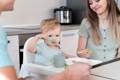
Montessori education is based on the idea that children naturally want to become independent. From birth to age six, their brains are in a highly absorbent state, which Dr. Montessori called the Absorbent Mind (also the name of the book written by Maria Montessori). During this time, kids are eager to take on real tasks, like feeding themselves.
Self-feeding is actually a key Montessori skill. As toddlers use a spoon, they’re building fine motor skills, hand-eye coordination, sensory awareness, and early problem-solving. It’s one of their first steps toward independence.
Unlike traditional approaches, Montessori encourages children to explore feeding at their own pace. Instead of rushing or stepping in, adults provide time, space, and child-sized tools so kids can learn by doing.
And it makes a difference: 90% of brain growth happens by age five. Every little scoop or spill helps connect movement to cognitive and emotional development, because feeding is just as valuable as stacking or sorting.

What is spooning in Montessori?
In Montessori, “spooning” is one of the first practical life activities introduced to toddlers to help build fine motor skills, concentration, and independence.
Spooning activities typically begin with dry materials, like transferring rice or beans from one bowl to another using a small spoon. This practice lays the foundation for later self-feeding. It teaches control, focus, and the concept of completing a task with purpose.
Eventually, the same coordination is applied to real mealtimes, which makes the transition to feeding with a spoon feel natural and achievable.
Developmental Readiness Signs
Before jumping into spoon practice, it’s important to watch for signs that your baby is ready. Every child develops at their own pace, but certain milestones can guide when to begin.
When Do Babies Learn to Use a Spoon?
- 6–9 months: Babies start showing interest in utensils and may try to grab yours. At this stage, they can sit with support and begin exploring pre-loaded spoons.
- 9–12 months: You’ll see early scooping attempts, often more dipping than actual eating. This is the beginning of self-feeding.
- 12–18 months: More coordinated scooping and bringing the spoon to the mouth. Spills are still common, but progress is visible.
- 18–24 months: Many toddlers can use a spoon fairly independently, with better wrist control and reduced mess.
Key Readiness Indicators
Look for these cues that your child is developmentally ready to begin spooning:
- Sitting steadily in a high chair without tipping
- Reaching for food or utensils during meals
- Hand-to-mouth coordination while playing or feeding
- A developing pincer grasp (thumb and forefinger working together)
- Imitating adults during mealtime
Watching for these signs helps you introduce spooning at the right time. When your toddler is curious, capable, and ready to learn.

Setting Up the Montessori Feeding Environment
A Montessori-aligned mealtime isn’t about perfection; it’s about purpose. The goal is to create a space where your child can explore feeding with confidence, comfort, and independence.
Essential Equipment
Choosing the right tools can make all the difference:
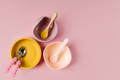
- Child-sized utensils: Go for real metal spoons sized for little hands. They're easier to grip and feel more purposeful than bulky plastic ones. For early stages, a Montessori baby self-feeding spoon from the Baby Bite Set is a perfect starting point.
- Shallow bowls with rims: These make scooping easier and reduce spills.
- Weaning table and chair: Sitting with feet flat on the floor improves posture and stability.
- Real dishes: Yes, breakable ones. They teach care and responsibility, which are the hallmarks of practical life learning.
Environment Setup
Your feeding space should be calm, consistent, and child-friendly:
- Use a mat or towel under the eating area to catch messes.
- Store dishes and utensils in a low, accessible place so your child can help set up.
- Decide between a family table or a weaning table. Both can work if they allow the child to feel included and stable.
- Remove distractions. Keep mealtimes screen-free and focused on the task at hand.
Practical Tips
- Try shot glasses for water, they’re the perfect size for toddler hands.
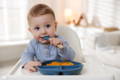
- Let spills happen and treat them as part of the process.
- Offer child-accessible cleanup tools like a small sponge or towel. This turns messes into learning moments.
Want to set up a kitchen your toddler can help with? Here’s a full guide to creating a Montessori kitchen at home.

Step-by-Step Teaching Method
Teaching your toddler to use a spoon the Montessori way is all about patience, consistency, and trust. It’s not about perfection, it’s about practice. Here’s how to guide them, step by step:
Introduction and Modeling (6–12 months)
- Dual-spoon method: Let your child hold one spoon while you feed with another. It builds familiarity and interest.
- Slow demonstration: Show how to scoop and bring the spoon to your mouth using calm, clear motions.
- Pre-loading: Dip the spoon in food and place it in your child’s hand so they can bring it to their mouth.
- Let them explore: At this stage, it’s okay if more food ends up on the floor than in their mouth.
Guided Practice (12–18 months)
- Help load the spoon: Assist with scooping while encouraging them to feed themselves.
- Hand-over-hand guidance: Lightly guide their hand if needed, then pull back.
- Take turns: Alternate bites between parent-fed and self-fed to build rhythm.
- Scale back support: As they improve, gradually do less.
Independent Mastery (18+ months)
- Let them take over: Give full control and let them scoop and eat independently.
- Add table setting: Encourage them to set their own spot with a spoon, bowl, and napkin.
- Cleanup as part of the routine: Include wiping the table or putting dishes in the sink.
- Introduce child-safe forks and other tools as skills progress.
Technique Tips
- Spoon grip: Encourage holding the spoon between thumb and index finger in an “L” shape.
- Wrist movement: Help them practice rotating the wrist for smoother scooping.
- Food placement: Start with thicker foods that stick to the spoon more easily.
- Encouragement > correction: Focus on effort and persistence rather than doing it “right.”

Common Challenges and Solutions
Learning to use a spoon isn’t always smooth, and that’s okay. These challenges are normal, and with a Montessori approach, they become learning opportunities.
Challenge 1: Refusal to Use the Spoon
Solution: Keep offering the spoon without pressure. Continue modeling during meals. Some children take weeks (or months) before they’re ready. Stay patient and consistent.
Challenge 2: Excessive Mess
Solution: Choose thicker foods like mashed avocado or yogurt that cling to the spoon better. Accept that a mess is part of learning. Think of each spill as sensory exploration and coordination practice in disguise.
Challenge 3: Reverting to Hand Feeding
Solution: Allow both hand and spoon use. Using hands builds tactile awareness and fine motor skills. Encourage spoon use without taking away the comfort of hands.
Challenge 4: Frustration and Tantrums
Solution: If your child gets overwhelmed, step back. Offer just enough help to support success without taking over. Keep meals short, positive, and pressure-free.
Foods That Support Spoon Learning
We can all agree that not all foods are easy to eat when it comes to spoon practice. The right textures can boost success and reduce frustration for your toddler.
Beginner-Friendly Foods
- Mashed avocado or banana
- Chia pudding
- Oatmeal
- Mashed sweet potato
Progressive Challenge Foods
- Yogurt with small fruit chunks
- Quinoa, rice, or small pasta
- Stews or thicker soups with soft vegetables
Foods to Avoid at First
- Thin soups or broths
- Slippery foods like blueberries or grapes
- Tiny rolling items like peas

Benefits Beyond Eating
Spoon skills might seem like a small milestone, but the developmental ripple effects go far beyond mealtime.
Fine Motor Development
Using a spoon strengthens the same muscles needed for writing, dressing, and other practical life skills. Each scoop is a mini workout for fingers, hands, and wrists.
Explore more here.
Hand-Eye Coordination
Bringing a spoon from the bowl to the mouth requires timing and accuracy. These skills lay the foundation for everything from catching a ball to drawing a circle.
Self-Confidence
When toddlers feed themselves, they experience a powerful sense of accomplishment. That pride builds intrinsic motivation and resilience.
Sensory Development
Exploring different textures, temperatures, and consistencies of food supports sensory integration, especially through touch and taste.
Explore more here.
Social Skills
Self-feeding encourages participation in family meals. Toddlers observe, imitate, and connect with others during shared routines, building their social-emotional toolkit.
Learn more here.

Conclusion
Teaching your toddler to use a spoon the Montessori way is about more than eating. Yes, it will be messy. Yes, it will take time. But every dropped bite is progress. Every sticky little hand is learning to do it themselves.
By creating a prepared environment, modeling the skill, and supporting each stage with patience, you’re building far more than a self-feeder. You’re nurturing independence, confidence, and real-world capability.
So start small. Offer a pre-loaded spoon. Let them try. Watch them light up when they succeed.
Want to make the process easier? The Montessori Baby Bite Set is a great first step toward toddler self-feeding independence.
Let your child learn through doing and trust that this simple act at the table builds skills that last a lifetime.

Free Delivery
Over $80

Easy Returns
No questions asked

Unbeatable Warranty
1-year ++ warranty
 Secure CheckoutWorld’s most secure payment method