
Hand-Eye-Mouth Coordination Skills and Activities for Baby Development
There’s something really special about the first time a baby reaches out and grabs a toy on purpose. It might seem like a small thing, but it actually means their hands, eyes, and mouth are starting to team up. And that’s where their brain is building new connections.
Dr. Maria Montessori even called the hand the “instrument of the mind.” So when babies reach, chew, and follow things with their eyes, they’re starting to figure out how learning works.
So yeah, we’ll explain what hand-eye coordination really means in terms of Montessori principles. Also, we’ll see why it matters and how you can support it at home in a natural, relaxed way. We’ll go through the stages from those early baby reflexes to confident toddler moves, and share easy, Montessori-inspired ideas you can try out.
No pressure, no rush, just simple, everyday ways to support the amazing things your baby is already doing. After all, nurturing a Montessori baby should always include lots of love, comfort, and good vibes.

Understanding Hand-Eye-Mouth Coordination
Before babies can walk or talk, they spend months learning how to see, reach, and interact, often using their mouth as the first tool. This three-part coordination is at the core of how they explore and make sense of the world.
The Science Behind Coordination Development
In the first 18 months, a baby’s brain is in rapid growth mode. As they track movement, reach for objects, and bring things to their mouth, they’re building neural pathways that connect vision, touch, and movement.
The cerebellum, the part of the brain responsible for balance and coordination, is especially active during this stage. As babies practice new movements, their brain adapts quickly. This is called brain plasticity.
There are also “sensitive periods” when the brain is especially open to learning specific skills. Supporting hand-eye-mouth coordination in a baby during this window lays the groundwork for more complex tasks later on.
So yeah, there’s a lot of stuff going on behind a simple reach for a toy your baby is doing. And, if you want to understand more about these windows of development? Here’s a guide to the Montessori planes of development.

Why Mouth Coordination Matters
Mouthing is how babies gather information. Their lips, tongue, and jaw are packed with sensory receptors, which means chewing, sucking, and licking help the brain learn about textures, shapes, and size.
Hand-mouth coordination in babies is also a building block for speech and feeding. The same muscles used to mouth a toy will later help form words, sip from a cup, and chew solid food. And it all starts with simple actions like sucking, swallowing, and breathing, which are coordinated movements that begin right after birth.
Learn more about how sensory development supports early learning.
The Montessori Perspective
Montessori emphasizes something called the education of the hand, which is the idea that movement and intelligence are deeply connected. In a Montessori environment, babies are given space to move freely, reach naturally, and explore with intention.
The role of the adult?
To prepare the environment, offer the right materials at the right time, and step back. When babies are allowed to explore without interruption, they naturally build coordination, independence, and focus.
Developmental Milestones by Age
Every baby develops at their own pace, but certain coordination milestones tend to follow a general timeline. Understanding what’s typical at each stage helps you support your child’s progress without pressure or comparison.
Newborn to 3 Months: Foundation Building
In these first months, movement is mostly reflexive, but the groundwork for coordination is being laid.
Motor milestones:
- Reflexes like rooting, sucking, and grasping are active.
- Hands begin moving toward the center of the body (midline).
- Early hand-to-mouth movements appear.
- Visual tracking starts as a baby follows slow-moving objects side to side.
- A baby can briefly fixate on an object.
- Suck-swallow-breathe pattern starts to coordinate.
- Movements are mostly symmetrical.
- The head begins turning toward sounds.

3–6 Months: Intentional Movements
Around four months, purposeful movement starts to happen, and this is when coordination really takes off.
Key developments:
- Reaching becomes intentional.
- Hands transfer objects back and forth.
- Improved head and neck control boosts visual focus.
- Objects are brought to the mouth more deliberately.
Milestone details:
- Eyes follow objects across a full range of motion.
- Palmar grasp (grabbing with the whole hand) begins.
- Baby starts to bat at hanging toys.
- Two-handed play becomes more common.

6–9 Months: Refined Control
Movement becomes more precise as sitting, and hand use improves.
Advanced skills:
- Pincer grasp starts to develop (thumb and forefinger).
- Baby sits independently, freeing hands for focused use.
- Objects are dropped and picked up on purpose.
- Banging and clapping become common.
Feeding coordination:
- Starts self-feeding with fingers.
- Cup drinking attempts (with spills).
- More coordinated chewing movements.
- Interest in spoon handling begins.

9–18 Months: Complex Integration
By this stage, babies are mastering multi-step movements and showing signs of independence.
Sophisticated coordination:
- Pincer grasp becomes more precise.
- Hand dominance may start to emerge.
- Tasks like turning pages or stacking blocks are doable.
- Two-handed manipulation is coordinated.
Advanced motor planning:
- Baby solves problems by manipulating objects.
- Understands cause and effect through action.
- Starts using simple tools (spoons, brushes).
- Can walk while carrying toys or small objects.
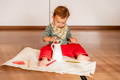
Month-by-Month Montessori Activities
Montessori activities are not complicated. They just need to meet your baby where they are. Here are simple, age-appropriate ideas that support coordination through everyday exploration.
Activities for 0–3 Months
- Use high-contrast mobiles like the Munari or Octahedron, hung at the right distance (8–12 inches).
- Offer black and white cards or patterns to promote early tracking.
- Let the baby watch slow-moving objects in natural light.
- Allow plenty of time with hands uncovered so the baby can explore them.
- During diaper changes, gently massage hands and fingers.
- Let the baby bring their own hands to their mouth without interruption.
- Position the baby in ways that support visual exploration (lying on back with visual points above).
- Set up safe, uncluttered tummy time spaces.
- Use a baby-safe mirror for face discovery and engagement.

Activities for 3–6 Months
- Offer wooden rattles and hand-to-hand discs to encourage grip and passing between hands.
- Hang objects within reach so the baby can practice batting and grabbing.
- Use teething toys with different textures (safe, natural materials).
- Let the baby's mouth clean cloth squares or wooden rings.
- Introduce treasure baskets filled with natural objects (under supervision).
- Offer various textures to touch and explore.
- Rotate items for new grasping experiences.

Activities for 6–12 Months
- Introduce object permanence boxes and large-knob puzzles.
- Offer stacking toys like rings or nesting cups.
- Begin using small, child-sized utensils.
- Encourage self-feeding with soft, safe finger foods.
- Let the baby try drinking from an open cup with support.
- Provide toys for dropping balls into containers.
- Use cause-and-effect toys that respond to touch.
- Introduce simple musical instruments (like a drum or shaker).
- Play some hand-eye coordination games.

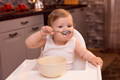
Activities for 12–18 Months
- Offer large beads and safe threading activities.
- Try basic posting toys (inserting objects into slots).
- Begin exploring scissor skills with child-safe scissors (supervised).
- Introduce spooning work using rice, beans, or small pasta.
- Practice pouring with mini pitchers into bowls or cups.
- Invite your child to help with easy food prep like peeling bananas
Creating the Optimal Environment
In Montessori, the environment acts as a silent teacher. A well-prepared space encourages exploration, movement, and independence, without needing constant adult direction.
Physical Environment Setup
To help your baby explore safely and confidently, it’s a good idea to baby-proof the space so they don’t hear a constant stream of “no’s.” Keep the floors clear to support crawling and movement, and try rotating toys now and then; this keeps things fresh and avoids too much clutter or sensory overload.
Bringing Montessori principles into your home can be simple and calming. Think low, open shelves where your baby can reach toys on their own.
Choose simple, beautiful items made from natural materials, and make sure there’s enough space for your little one to move freely while still feeling the comfort of clear boundaries.
Material Selection Guidelines
When choosing toys or materials for your baby, go for natural textures like wood, fabric, or metal instead of plastic. Look for items that are just the right size for tiny hands and that offer a mix of sensory experiences, something they can feel, hear, and see. It also helps to have a balance: a few simple items they’ve already mastered, along with some that gently challenge them as they grow.
Of course, safety comes first. Make sure everything is made from baby-safe, non-toxic materials and free from small parts that could be a choking risk. You’ll also want toys that can handle a bit of rough love, especially during the mouthing stage, and are easy to clean.
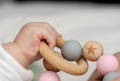
A great example? The Montessori Baby Bite Set. It’s simple, safe, and perfect for helping little ones explore grasping and mouthing in a natural way.

Supporting Healthy Development
You don’t need to push milestones. Your baby is already wired to grow, and your role is to offer the right support at the right time.
Encouraging Natural Progression
- Observe before jumping in: Let your baby try and figure things out. Struggle is often part of the learning process.Offer stacking toys like rings or nesting cups.
- Step back but stay present: Your calm support creates a safe base for exploration.
- Offer just the right challenge: Not too easy, not too hard, just enough to keep them interested.
- Celebrate small wins: Mastering a new grip or reaching a toy is a big deal to your baby. Show them it matters.
Common Concerns and Solutions
- Your baby is reaching later than expected.
- Mouthing seems to go on “too long”.
- One hand becomes dominant early.
- Your baby struggles with coordination.

The Long-Term Impact
That first reach, that first grip, they might seem small. But they’re laying the groundwork for big things.
Future Skill Foundation
- Writing and academics: Fine motor control, visual tracking, and focus all start here.
- Independence: Skills like self-feeding, dressing, and grooming rely on strong coordination.
- Confidence and emotional resilience: Success through practice helps children trust themselves.
- Creative problem-solving: Eye-hand coordination activities like exploring how things fit, move, and react build a curious, capable mind.
Research-Based Benefits
- Improved sensory processing and motor planning.
- Stronger neural networks are tied to learning and self-regulation.
- Enhanced focus, memory, and cognitive flexibility.
- Greater overall brain development.
Conclusion
Hand-eye-mouth coordination might seem small, but it’s a big step in how babies connect with the world. Every reach and mouthing moment helps build skills for later, like eating, writing, and getting dressed.
Montessori encourages this naturally, without rushing, and with great hand-eye coordination examples. You don’t need fancy toys, just a calm space, a few simple materials, and time to follow your baby’s lead. Start small. Offer a rattle, create space to move, and follow your child’s lead. It’s in these everyday moments that real learning happens.

Free Delivery
Over $80

Easy Returns
No questions asked

Unbeatable Warranty
1-year ++ warranty
 Secure CheckoutWorld’s most secure payment method